

Enterprises begin to think in decades instead of quarters
Enterprises often treat custom software as an operational upgrade: fewer manual steps, faster workflows, less friction. Those benefits are real—but they’re not the deepest value.
The bigger shift happens when custom software becomes the organisation’s operational intelligence layer: the system that standardises how work flows, how decisions are made, how performance is measured, and how governance scales over time.
In other words, custom software doesn’t just streamline operations—it helps an enterprise stay aligned with its long-term vision.
Fragmented systems create reactive leadership
When a business runs on fragmented tools, spreadsheets, disconnected SaaS products, and manual interventions, decision-making becomes reactive by default.
Leadership teams spend a surprising amount of cognitive bandwidth on:
- Reconciling data inconsistencies across teams and systems
- Handling operational exceptions that never fully get resolved
- Managing duplicated workflows and unclear ownership
- Working around communication silos
- Waiting on delayed reporting cycles
Over time, this operational noise chips away at strategic focus. The organisation starts optimising for the next fire drill instead of the next decade.
A unified platform creates decision continuity
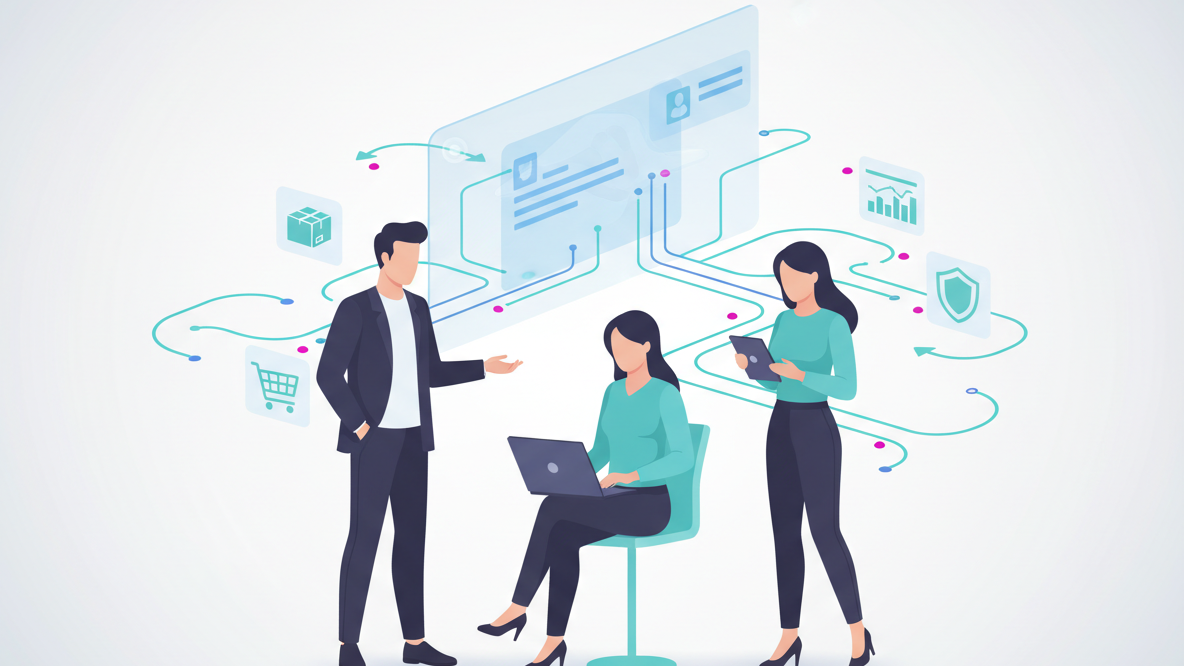
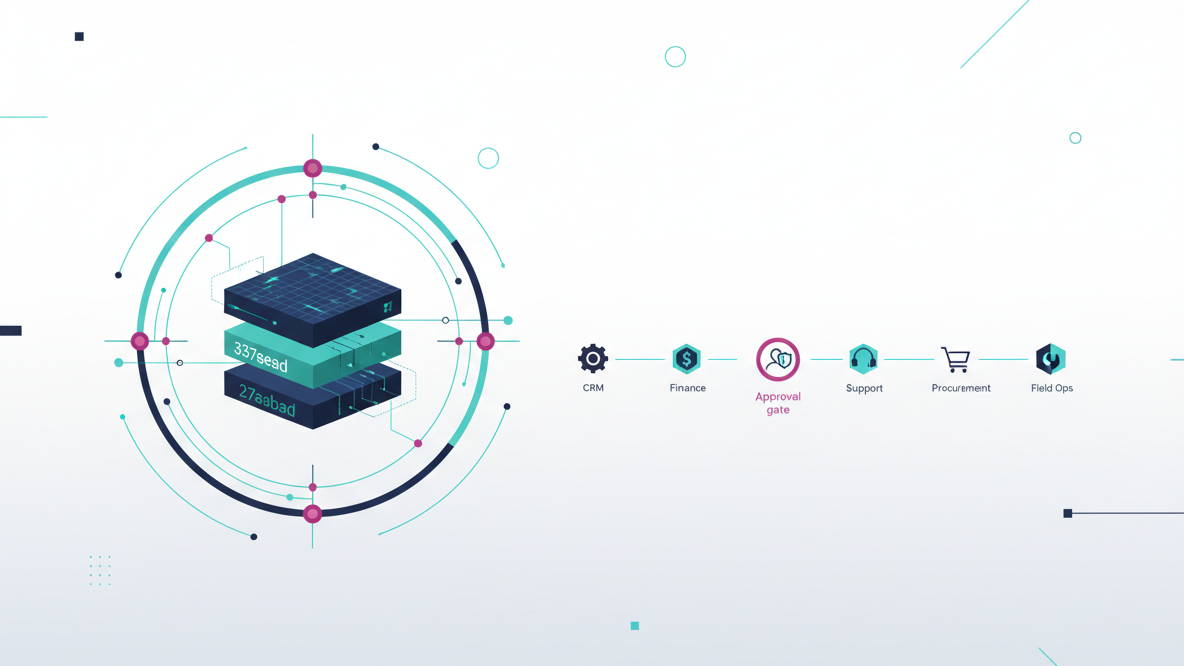
A deeply engineered enterprise platform connects departments and business functions through structured logic and shared visibility.
It can unify:
- Workflows and approvals
- Customer interactions and service delivery
- Vendor ecosystems and procurement
- Inventory movements and fulfilment
- Financial systems and reporting
- Compliance checkpoints and audit readiness
- Performance metrics and operational KPIs
When operational data flows through centralised process orchestration, audit trails, workflow automation, API integrations, and real-time visibility layers, leadership gains something extremely important:
Decision continuity.
Instead of making decisions based on partial snapshots and short-term disruptions, leaders can see longitudinal patterns—what is consistently happening, what is changing, and why.
How custom software supports long-horizon thinking
Custom software enables enterprises to build an operating model that stays stable as the organisation grows, changes, and expands across geographies.
Key long-term advantages include:
- Standardised operational behaviour across teams, locations, and business units
- Organisational philosophy encoded into workflows (how approvals work, what “good” looks like, what gets escalated)
- Process resilience independent of turnover, so execution quality doesn’t depend on tribal knowledge
- Reduced strategic drift, because teams operate within one coherent system instead of many disconnected ones
- Clean enterprise-wide data pipelines that support forecasting and predictive planning
- Institutional memory through traceable history, enabling better governance and post-mortems
- Scalable governance architecture, so controls and accountability grow with the business
Over longer time horizons, these aren’t “nice-to-haves.” They become a defensible strategic advantage.
From operational efficiency to strategic confidence
When operations are engineered around the organisation’s long-term vision, leadership can pursue deeper transformation initiatives because unpredictability drops.
- Forecasting becomes more reliable
- Resource allocation becomes more precise
- Cross-functional coordination becomes measurable
- Exception handling becomes systematic instead of chaotic
Most importantly, custom software creates alignment between strategic intent and operational execution.
Closing thought
If your enterprise is building for the long term, your systems should be built for the long term too.
Custom software, done right, is not just a tool for efficiency. It’s a foundation for long-horizon strategy, better decision-making, and scalable execution.