

Seamless enterprise mobility powered by balanced thin and thick client architecture
A desk no longer defines the modern workforce—it’s defined by mobility, continuity, and real-time execution. Work doesn’t pause when you step out of the office. Decisions, approvals, and operations are expected to move with you.
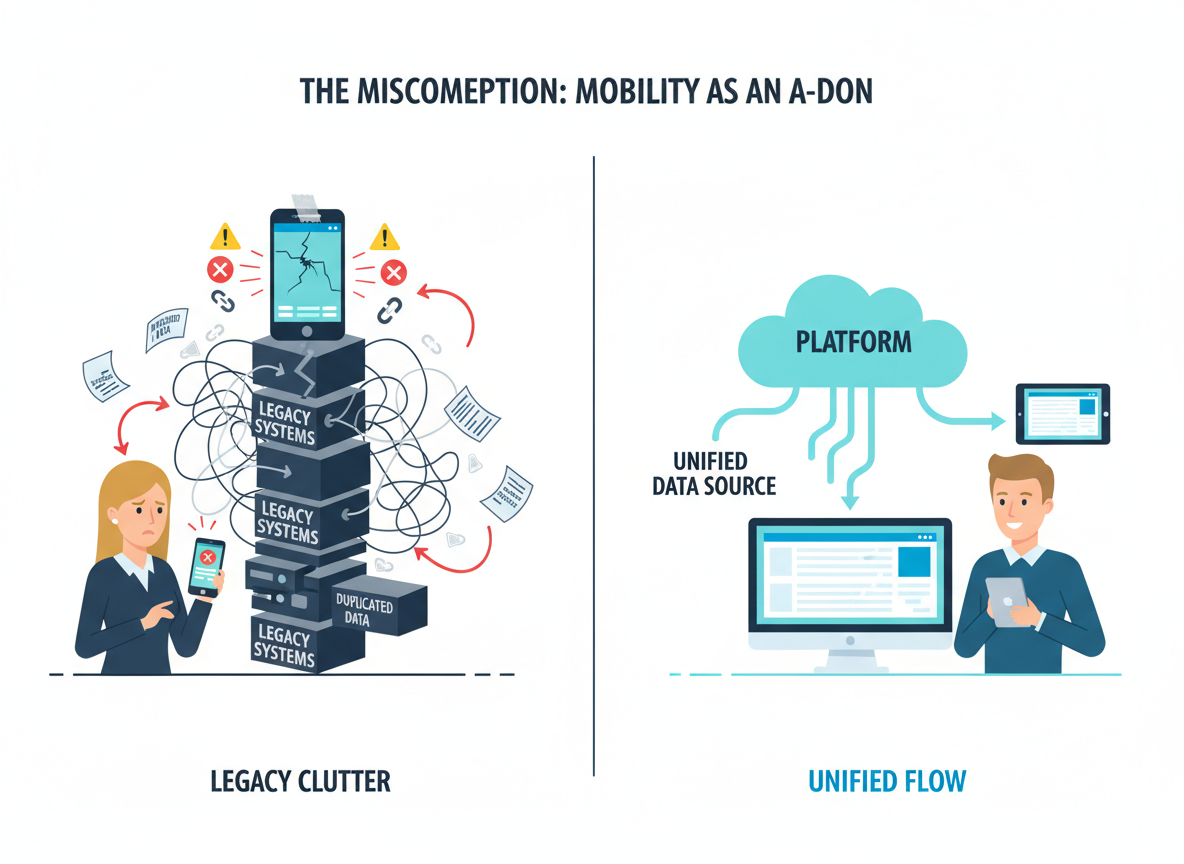
Yet true enterprise mobility isn’t achieved by “adding a mobile app” on top of legacy systems. In most organizations, that approach creates a second, disconnected experience—different data rules, different workflows, and a new set of exceptions.
Real mobility is engineered into the core workflow.
The misconception: mobility as an add-on
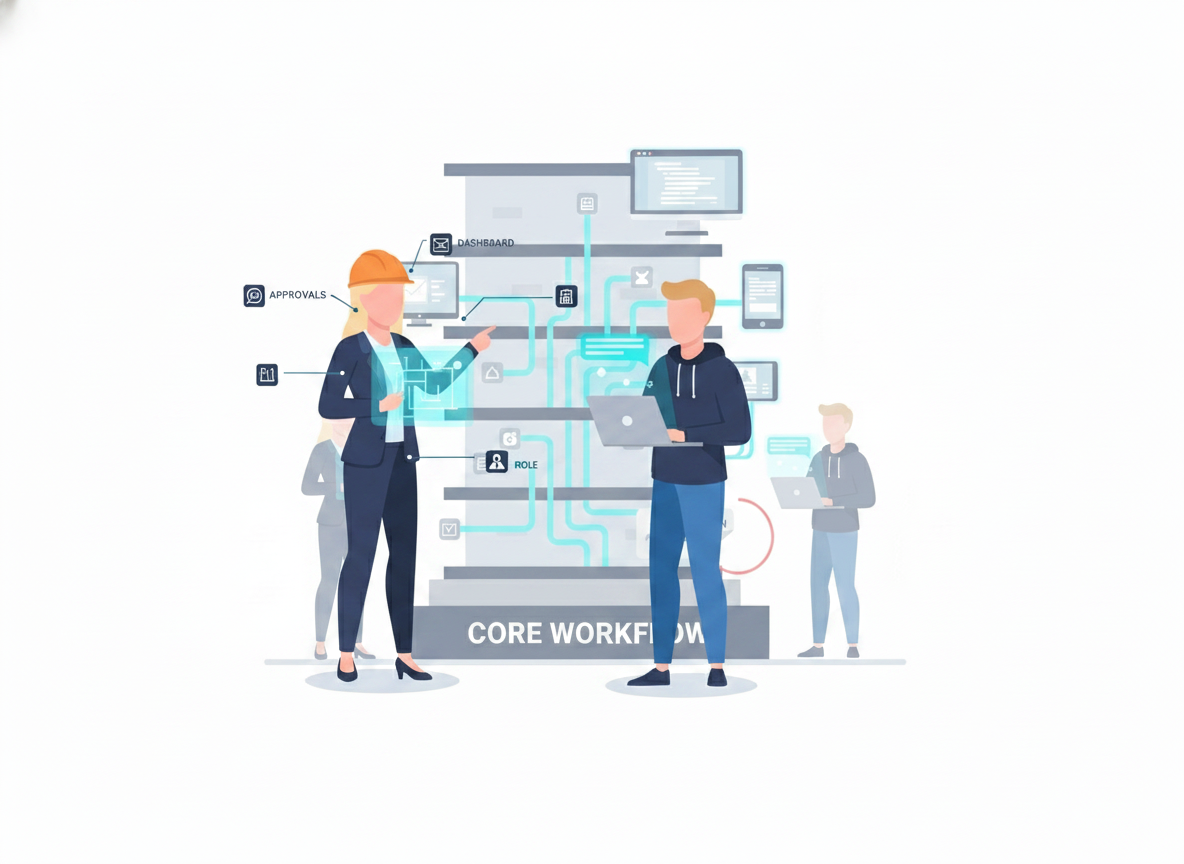
Many enterprise stacks were built for depth:
- Complex workflows
- Heavy data entry
- Multiple roles and permissions
- High-volume operations
That’s exactly where thick clients (or robust desktop/web experiences) still shine.
But the modern enterprise also needs speed:
- Approvals in minutes, not days
- On-the-go visibility
- Fast actions that keep pipelines moving
That’s where thin clients and mobile-first interfaces win.
The mistake is treating these as competing choices.
The advantage: a balanced thin + thick client ecosystem
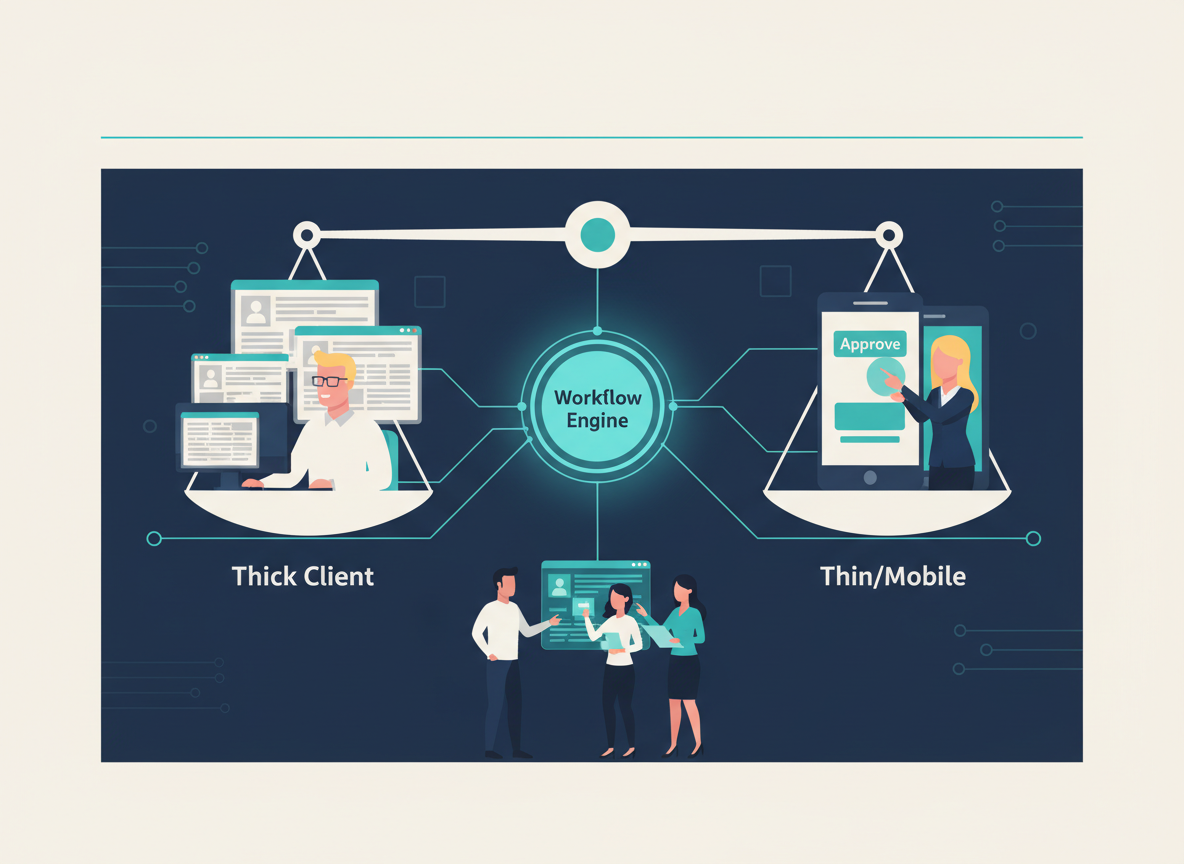
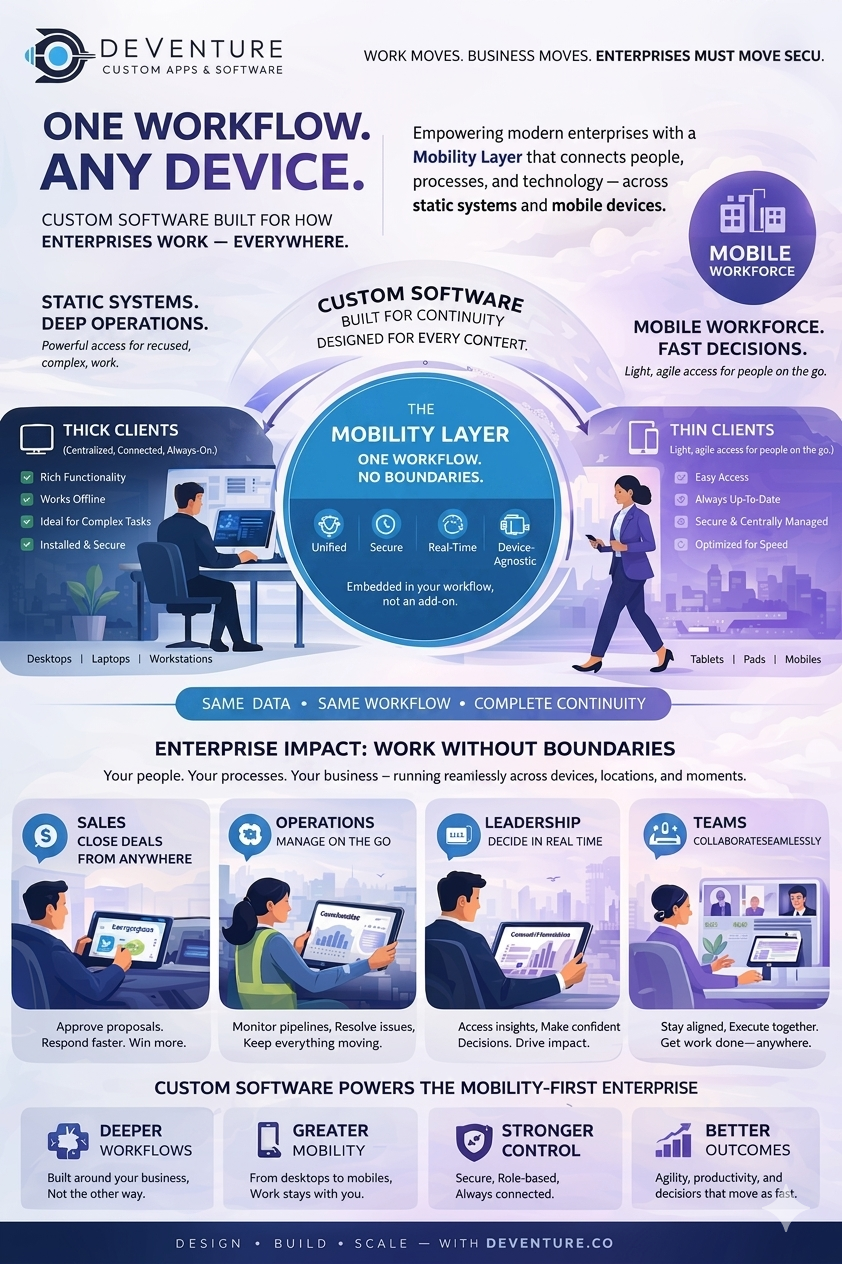
Custom-built software products create a fundamental advantage because they can be designed as one ecosystem across environments:
- Thick clients / desktop-grade interfaces for intensive operations and high-context work
- Thin clients and mobile apps for quick execution, visibility, and decision-making
When architecture is intentional, the result isn’t fragmentation—it’s continuity.
What Seamless actually means in practice
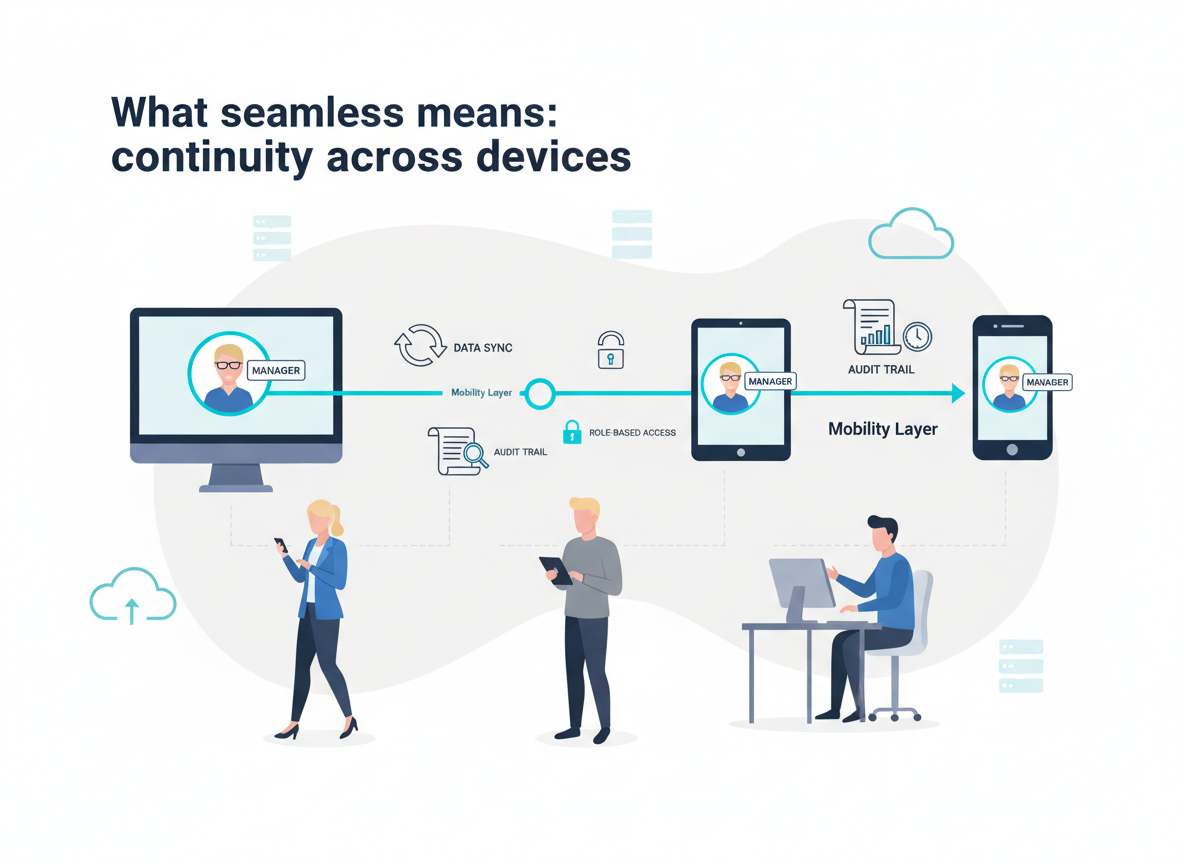
A well-architected custom software ecosystem ensures that:
- Data flows consistently across devices (same source of truth, same rules)
- User roles and permissions remain intact regardless of access point
- Workflows are optimized for depth and speed (desktop for complexity, mobile for momentum)
- Decision-making becomes location-independent without losing governance
In other words: mobility becomes a native capability of the enterprise workflow—not a bolt-on feature.
Why custom software matters here (and off-the-shelf often struggles)
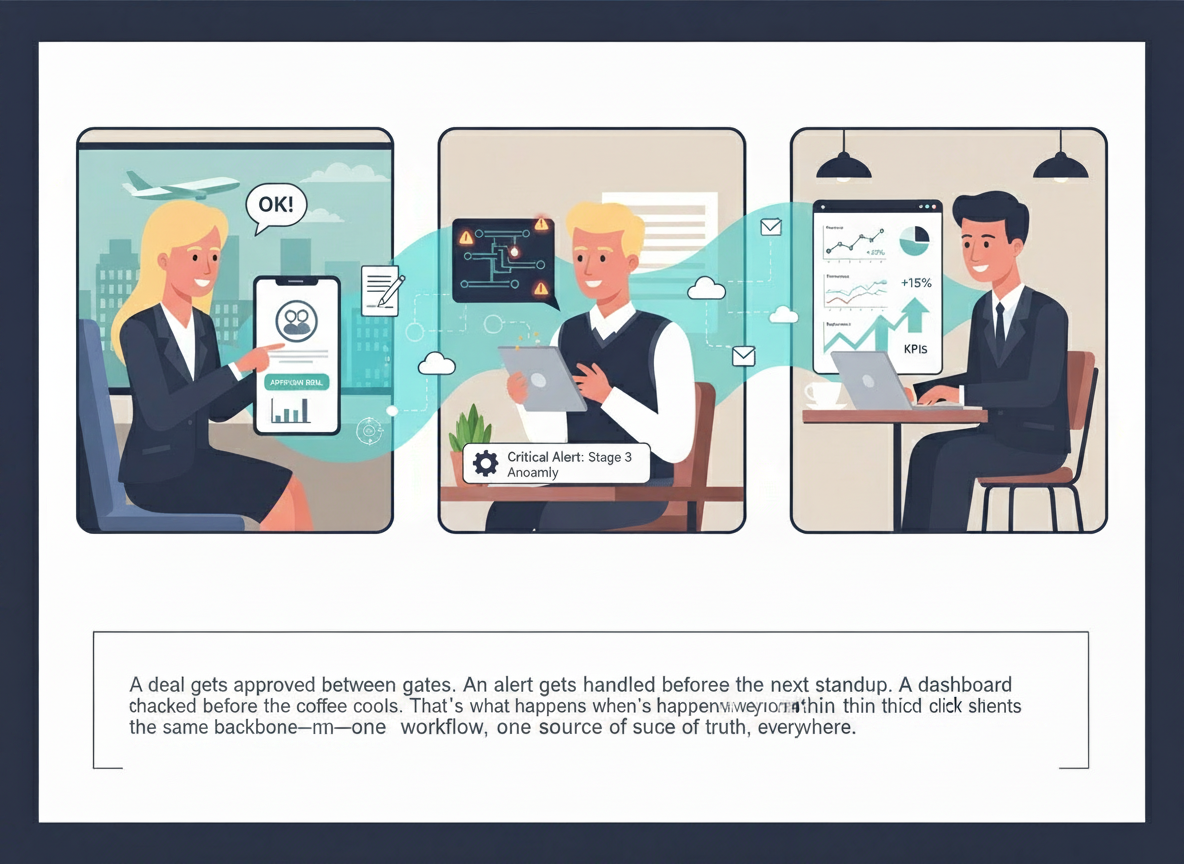
Off-the-shelf tools can be great for standard processes.
But enterprise mobility often breaks down in the “non-standard” moments:
- Role-based approvals with exceptions
- Industry-specific compliance requirements
- Complex handoffs between departments
- Real-time operational visibility across multiple systems
Custom software lets you engineer these realities into the product—so the mobile experience isn’t a simplified copy, but a deliberate extension of the same workflow.
Concrete examples of mobility done right
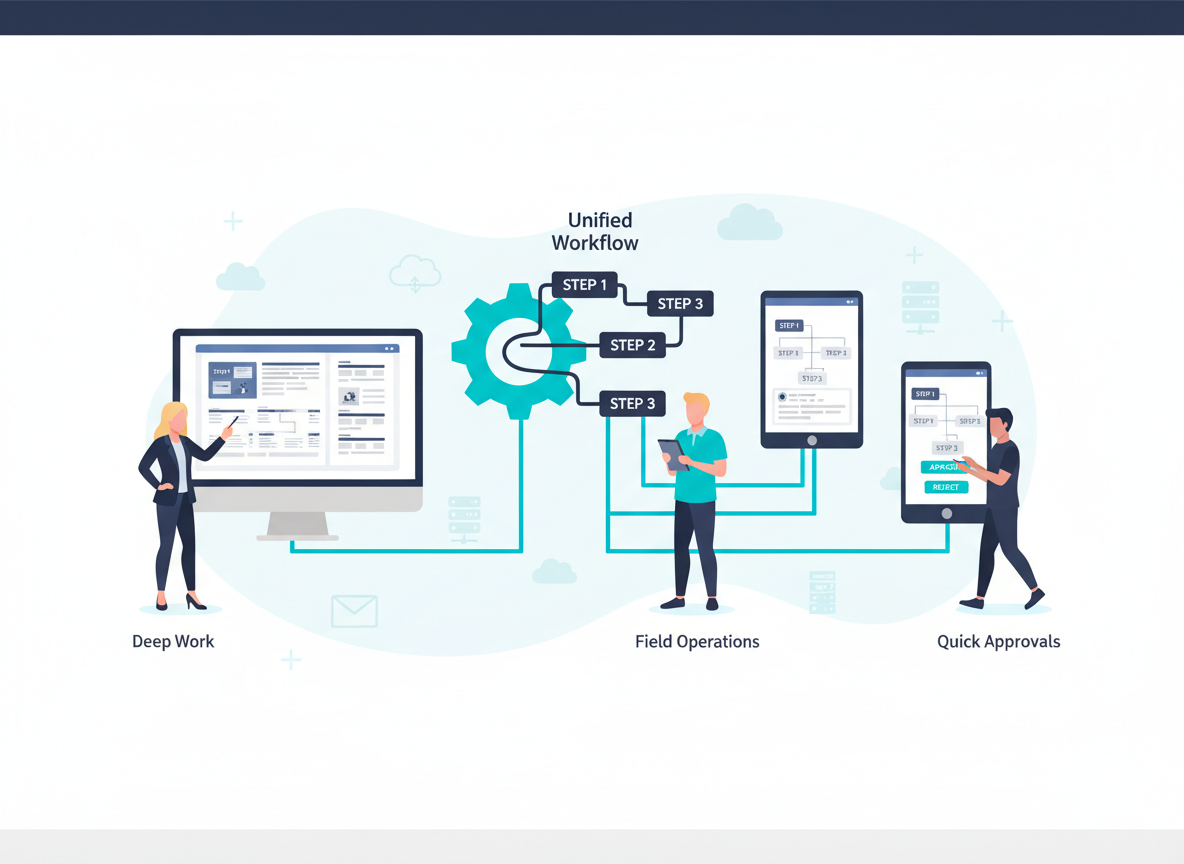
When mobility is engineered correctly:
- A sales head approves deals mid-transit (with the same controls as desktop)
- An operations manager monitors pipelines remotely and acts on exceptions immediately
- Leadership accesses real-time dashboards without being tethered to infrastructure
Mobility doesn’t dilute control—it enhances responsiveness without compromising structure.
The architecture mindset: one workflow, multiple interfaces
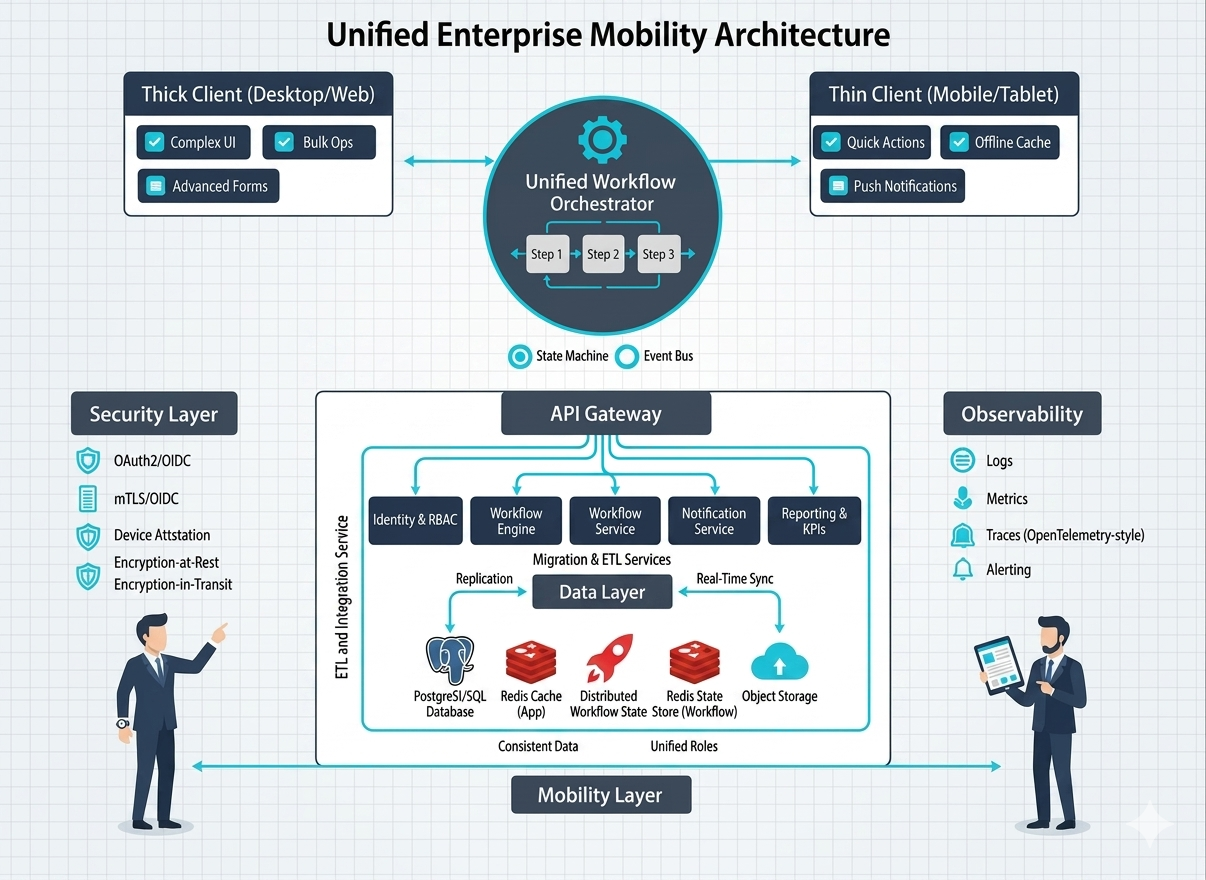
The goal isn’t “a desktop system” and “a mobile system.”
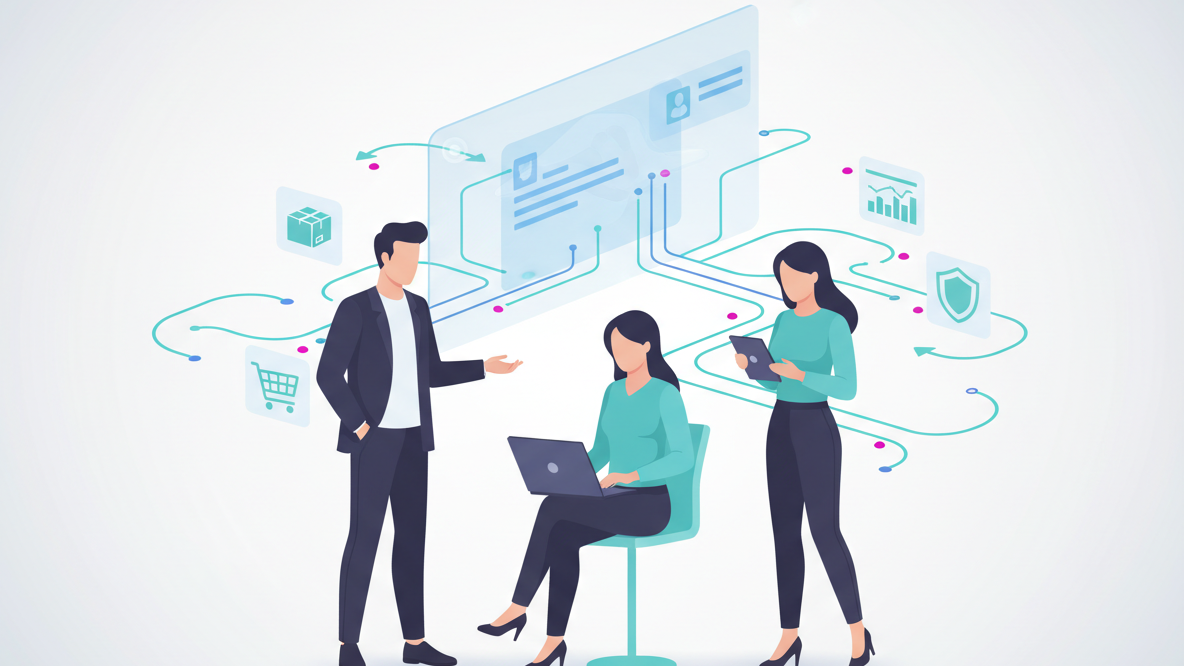
It’s one workflow expressed through multiple interfaces, each optimized for the context of use.
That’s the difference between:
- A company that has mobile apps
- And a company that is mobile by design
Our perspective at Deventure
At Deventure.co, we believe enterprises that invest in custom-built software aren’t just digitizing processes.
They’re redefining how work moves—from static systems to fluid, device-agnostic execution layers.
The future of enterprise operations is not just digital.
It is mobile by design and seamless by architecture.
If you’re exploring enterprise mobility and want to avoid the “add-on app” trap, we are happy to compare approaches and share what we’ve seen work in real-world delivery.