

Software complexity is often treated like a fact of life in enterprise environments. New platform? Expect weeks of onboarding. New workflow? Add another training session. New team member? Hand them a manual and hope they don’t break anything.
But complexity isn’t inevitable. In most cases, it’s a side effect of generic software trying to serve thousands of unrelated workflows across multiple industries. That’s where many SaaS platforms begin to create friction: they’re built to fit everyone, so they fit no one perfectly.
At Deventure.co, we take a different view: enterprise software should feel intuitive from the very first interaction. Not because it’s “simpler” in a superficial way, but because it’s designed around how your organization naturally operates.
Why SaaS Often Feels “Hard” (Even When It’s Feature-Rich)
SaaS products are engineered for broad market compatibility. That means they typically come with:
- Bloated interfaces designed to support many different business models
- Redundant feature layers that only apply to certain industries
- Generalized workflows that don’t match your approval chains, data relationships, or internal terminology
- Configuration-heavy setups that still can’t fully reflect how your teams actually work
The result is predictable: employees spend time figuring out the system instead of executing outcomes.
And when users have to translate “how we do things” into “how the software wants us to do things,” you get:
- Extra clicks and unnecessary screens
- Workarounds and shadow processes (spreadsheets, side tools, manual checks)
- Higher error rates and inconsistent execution
- Slower adoption and ongoing training costs
This isn’t a user problem. It’s a product design problem.
What Makes Custom Software More Intuitive
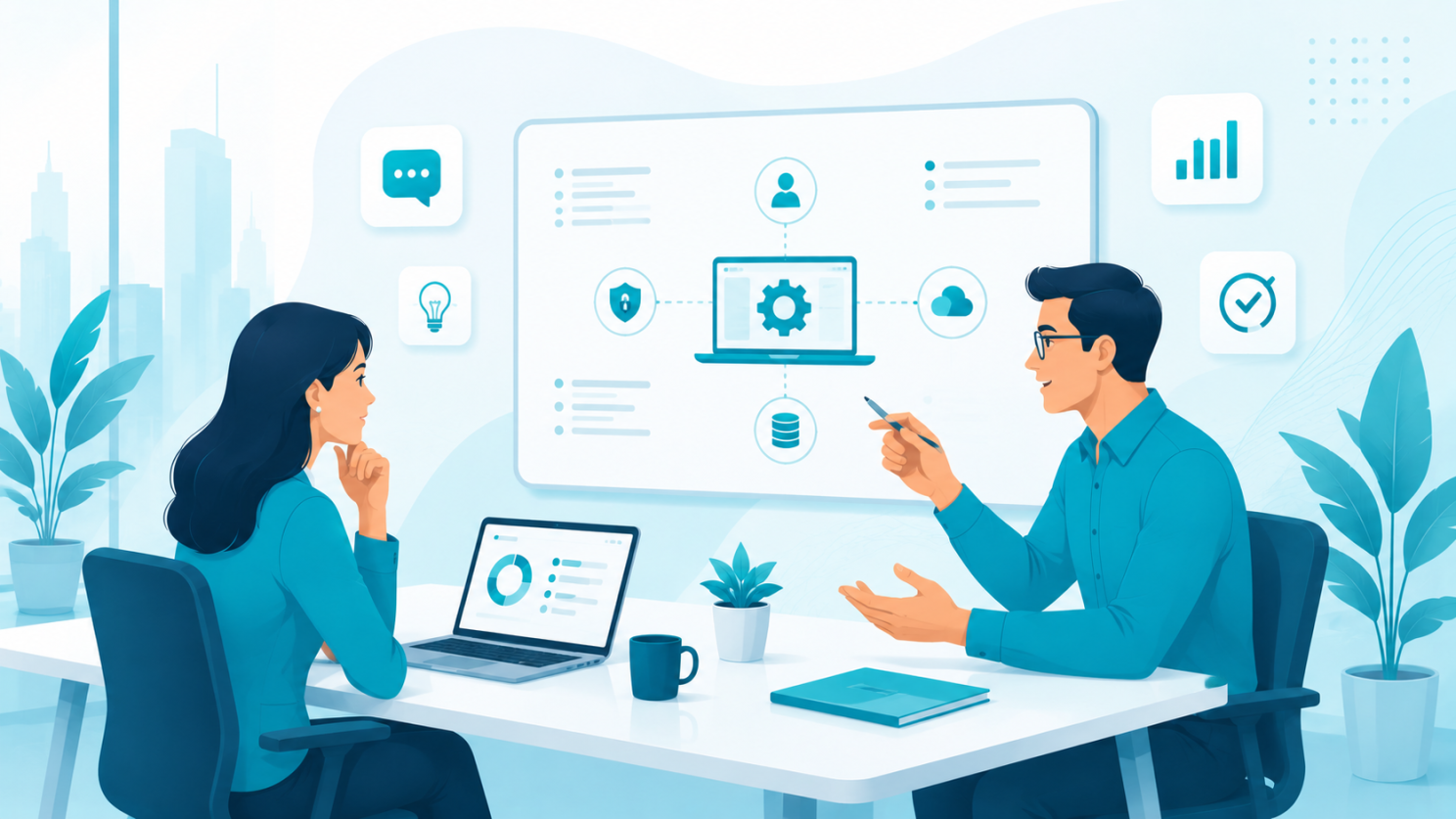
Custom software becomes intuitive when the UI, UX, and business logic are designed around the enterprise itself—instead of forcing the enterprise to adapt to the software.
That shift changes everything.
1) The interface reflects real workflows, not generic assumptions
In a custom platform, every screen, action button, data field, and dashboard exists for a reason. The product isn’t trying to accommodate every possible workflow; it’s engineered to support your workflow.
That means:
- The navigation matches how teams think about tasks
- The system uses your terminology and your operational structure
- Users see the right next step without hunting for it
- The workflow feels like a natural sequence, not a maze
Instead of “Where do I click to do this?” the experience becomes “Of course this is the next step.”
2) Role-aware experiences reduce cognitive load
Most enterprise teams don’t work the same way across roles. Finance, operations, sales, support, and leadership each need different views, permissions, and task flows.
Custom software can be designed to understand:
- The role of the user
- The approval hierarchy
- The transaction flow
- The data relationships across departments
So the system can:
- Surface only relevant workflows
- Hide irrelevant modules Dynamically adjust permissions
- Present the right data at the right time
This reduces cognitive overload. Users don’t have to interpret a “universal” interface; they operate inside a workspace designed specifically for their responsibilities.
3) Validation logic prevents mistakes before they happen
In deeply engineered custom platforms, validation isn’t just a generic “required field” check. It’s connected to real business operations.
For example, the system can:
- Restrict invalid actions based on business rules
- Prevent steps that violate approval policies
- Block transactions that don’t match operational constraints
- Prompt users with context-aware guidance when something looks off
This is where “intuitive” becomes more than just UI polish. The software actively guides users toward correct execution.
When the product understands the business, it can prevent operational mistakes by design.
4) Fewer clicks, fewer decisions, faster execution
A common misconception is that productivity comes from adding more features. In practice, productivity comes from removing unnecessary decisions.
Custom software eliminates friction by:
- Removing irrelevant options
- Streamlining multi-step processes into fewer actions
- Automating repetitive decisions and handoffs
- Designing dashboards that reflect what teams actually need to act on
The outcome is speed—not because users are rushing, but because the system is aligned with how work already happens.
Invisible Software Is the Real Goal
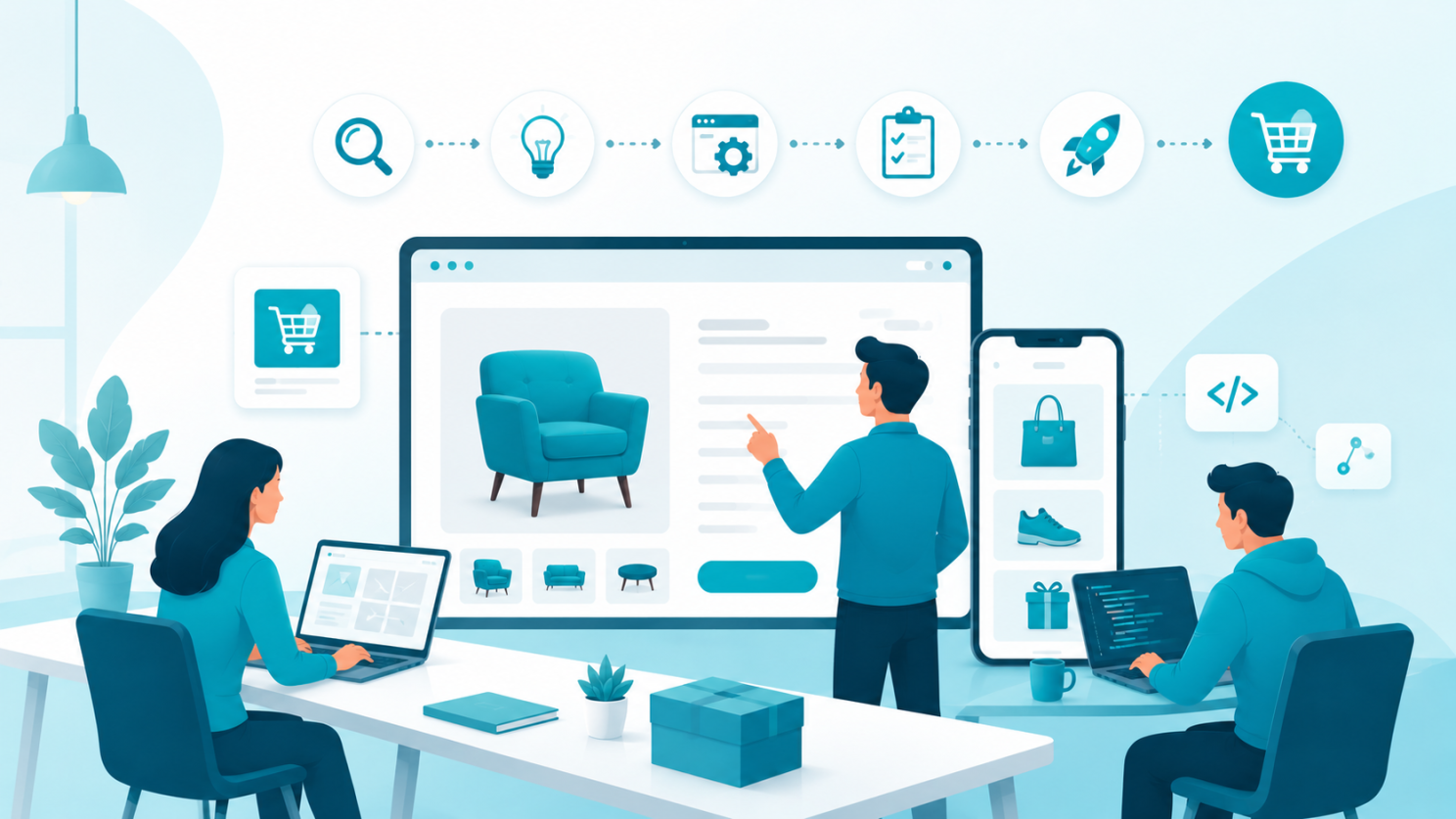
The best enterprise software isn’t the one with the most features. It’s the one that feels almost invisible during execution.
When architecture, workflows, APIs, data pipelines, automation layers, and interface systems are purpose-built around the organisation:
- Adoption becomes easier because the product matches reality
- Training time drops because the workflow is self-explanatory
- Execution becomes consistent because the system guides correct behaviour
- Productivity increases because users focus on outcomes, not navigation
Employees don’t spend time learning the system. They spend time delivering results.
That directly improves operational efficiency, adoption rates, internal confidence, customer experience, and satisfaction.
Where Deventure Fits In
At Deventure.co, we build full-stack custom software solutions designed for both speed to market and uncompromising quality. Because we deliver UI/UX design, engineering, and QA in-house, we can engineer platforms where the experience and the logic are aligned—so the product feels natural from day one.
If your teams are spending more time adapting to software than executing work, that’s a sign you’ve outgrown generic platforms.
Custom software isn’t just easier to use.
It’s engineered for natural execution.