

The strongest enterprises are not built by leadership sitting at the top alone. They are built by decision-making intelligence that flows—deliberately, efficiently, and without friction—from the boardroom all the way down to the bottom-most operational layer of the business hierarchy.
This is not a management philosophy. It is an infrastructure imperative.
The Boardroom Was Never Designed for the Speed of Modern Business
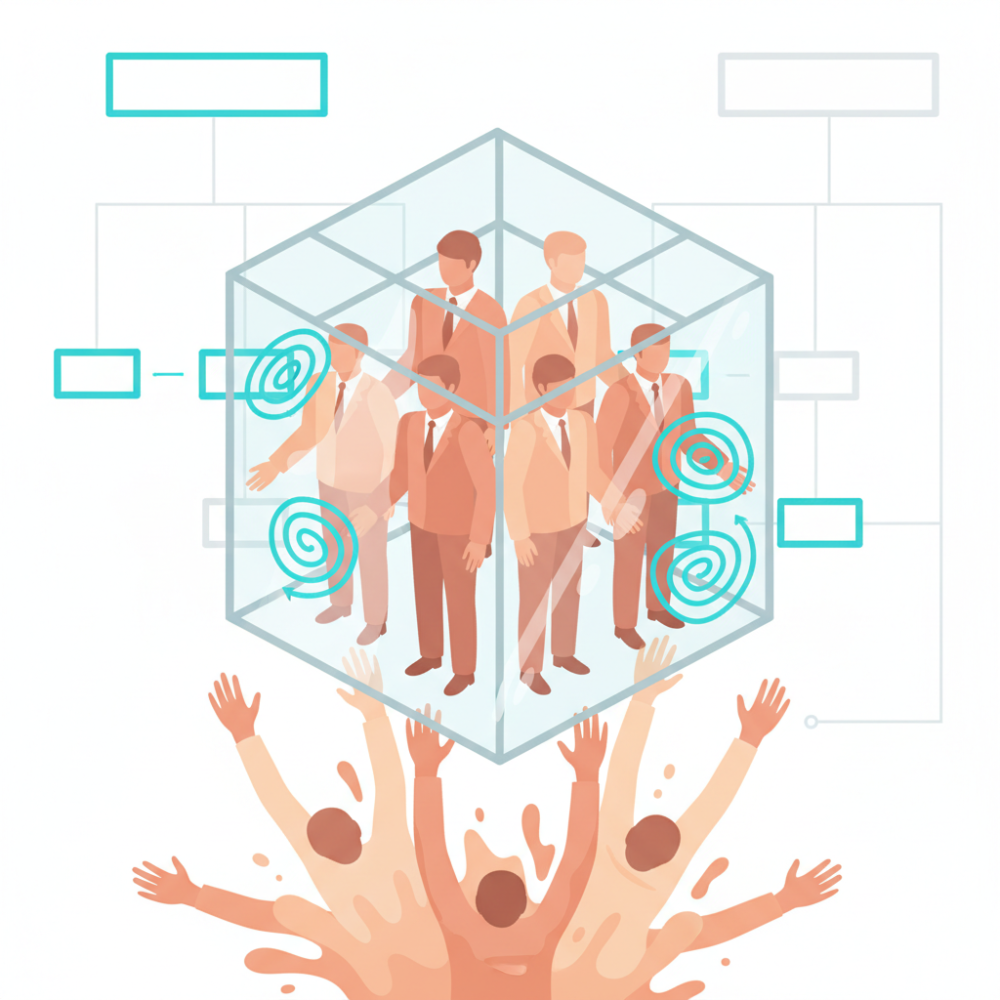
For decades, enterprise decision-making followed a predictable pattern: information travelled upward, deliberation happened at the top, and instructions cascaded back down. The boardroom was the nerve centre. Meetings were the mechanism. And time—often days or weeks of it—was the price.
That model worked when markets moved slowly, competition was local, and the window between a decision and its consequence was wide enough to absorb delay.
That window has closed.
Today, the pace at which information moves, markets shift, and competitors act has fundamentally outpaced the capacity of centralized, presence-dependent decision-making. Businesses that still rely on the boardroom as their sole decision engine are not just slow—they are structurally vulnerable.
When information is flying thick and fast, the future of an enterprise is often decided not only by CXOs, but by the people closest to execution: sales teams, operations managers, field staff, project leads, finance controllers, and every individual responsible for outcomes in motion.
The question is: can they make the right decision at the right time?
The Illusion of Control That Generic Systems Create

Most enterprises, in an attempt to manage complexity, deploy generic off-the-shelf software platforms. ERPs. CRMs. Workflow management systems. These tools promise centralization, visibility, and control—and in many respects, they deliver it.
But centralization and agility are not the same thing. And for high-growth enterprises operating across geographies, teams, and time zones, the distinction is critical.
Generic systems are built for the average enterprise. They are designed around standardized workflows, fixed approval hierarchies, and predetermined process templates. They consolidate data effectively. But they rarely distribute decision-making authority in a way that matches how modern organizations actually operate.
The result? Rigidity masquerading as structure.
Teams find themselves locked in approval queues waiting for a senior signatory to be at their desk. Operations managers cannot resolve live execution issues without escalating through three layers of hierarchy. Finance controllers cannot clear time-sensitive transactions without physical access to a specific terminal. Decisions that should take minutes take days—not because the business lacks the information, but because the infrastructure lacks the mobility.
This is not a people problem. It is an architecture problem.
Enter Enterprise Mobility

Custom software changes the architecture.
When software is purpose-built for an enterprise—designed around its specific workflows, its organizational structure, its decision hierarchies, and its operational realities—it does something generic systems cannot: it puts decision-making capability exactly where the work is happening.
This is Enterprise Mobility. Not mobility in the narrow sense of having a mobile app—but mobility in the deep strategic sense of making the full power of enterprise decision-making accessible from any device, any location, at any moment.
The technical foundation for this is the deliberate design of software around thick and thin client architecture—a dual-layer approach that gives enterprises both computational depth and operational agility simultaneously.
Thick Clients: Where the Business Logic Lives

A thick client acts as a software application that operates with significant local processing capability. It is built for depth—handling complex computation, intensive workflows, large-scale reporting, advanced analytics, backend data processing, and the heavy operational precision that enterprise performance demands.A thick client acts as a software application that operates with significant local processing capability. It is built for depth—handling complex computation, intensive workflows, large-scale reporting, advanced analytics, backend data processing, and the heavy operational precision that enterprise performance demands.
Think of the thick client as the engine room. It is where complex financial models are run, where large datasets are processed and visualized, where deep business logic is executed, and where the full weight of enterprise operations is managed. It requires robust hardware, reliable connectivity, and a focused operating environment—and in exchange, it delivers uncompromising capability.
For enterprise leadership, thick clients are the command and control layer. They give decision-makers the comprehensive view, the analytical depth, and the operational precision to steer the business with clarity.
Thin Clients: Where Agility Is Born

A thin client on the flipside a lightweight software interface—optimized for speed, accessibility, and mobility. It does not attempt to replicate the full computational weight of the thick client. Instead, it surfaces exactly what a specific user needs to act, decide, or respond—in the moment, from wherever they are.
Thin clients run on tablets, mobile phones, and lightweight devices. They are built around role-specific workflows, presenting the right information to the right person with the minimum friction necessary for immediate action.
A sales leader sees a pending contract approval. One tap. Done.
An operations manager receives a live alert about a logistics bottleneck. They resolve it remotely before it becomes a delay.
A finance controller clears a payment authorization from a departure lounge.
A project lead adjusts resource allocation mid-transit without waiting to return to the office.
The thin client does not replace the depth of the thick client. It extends it. It takes the intelligence that lives inside the enterprise's software infrastructure and makes it actionable at the edges of the organization—where execution is happening and where speed matters most.
How Custom Software Synchronizes Decision-Making Across Every Layer of the Enterprise

In a traditionally structured enterprise, decision-making operates in silos. The executive layer makes strategic calls. The management layer interprets and plans. The operational layer executes. Each layer functions largely in isolation, communicating through reports, meetings, and escalation chains. Information that originates at the execution layer takes time—sometimes significant time—to reach the strategic layer. Decisions that originate at the strategic layer take equally long to reach execution.
Custom software eliminates this latency by design.
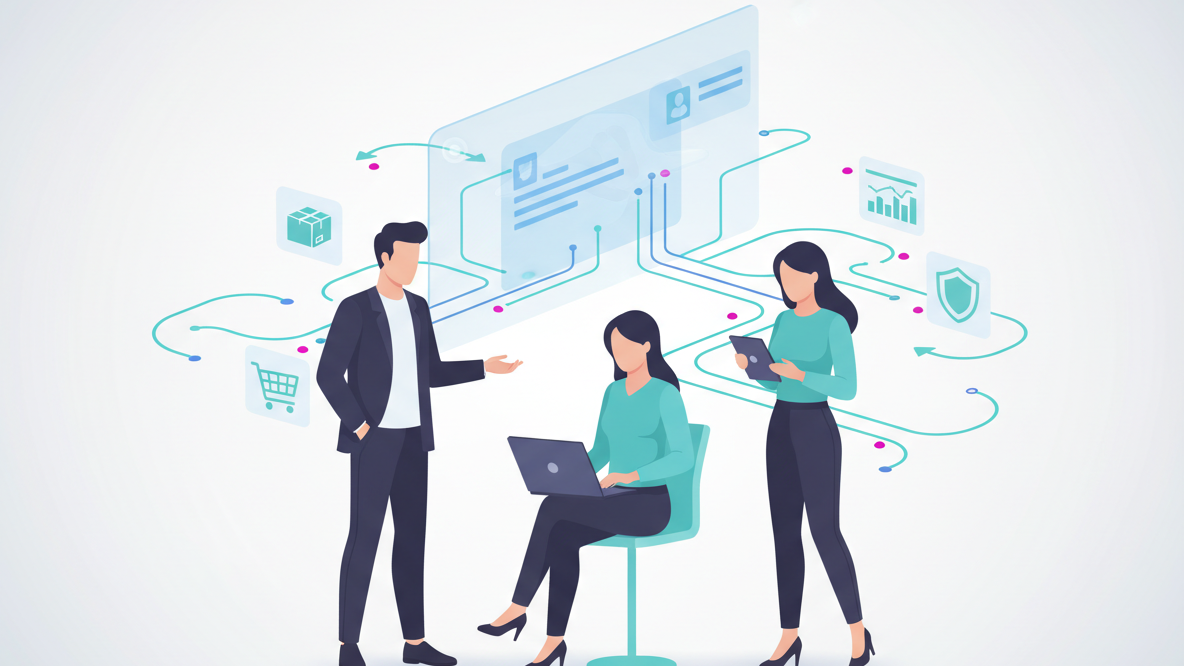
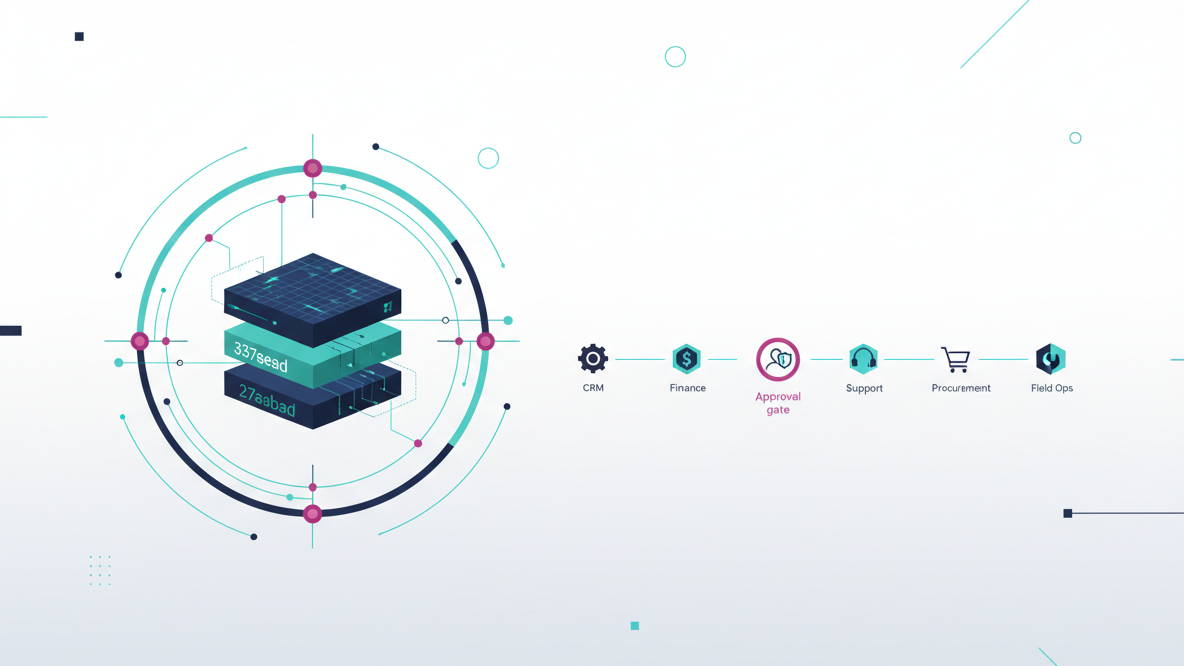
When a platform is built around the specific hierarchy, workflows, and data architecture of an enterprise, it creates a single synchronized intelligence layer that connects every role, every function, and every level of the organization in real time.
At the executive layer, leadership has live visibility into operational performance, decision queues, team consensus signals, and strategic KPIs—accessible from any device, at any moment.
At the management layer, directors and department heads can monitor live execution, surface emerging risks, coordinate cross-functional responses, and push decisions forward without convening a meeting.
At the operational layer, team leads, project managers, and frontline staff can act on decisions delegated to their level—approving, escalating, resolving, and communicating—within the platform, without breaking the chain of accountability.
The result is a business where every layer is making decisions in the same moment, with the same information, aligned to the same strategic intent. Not sequentially. Simultaneously.
This is decision synchronization at scale. And it is only achievable through software that is built specifically for how your enterprise works—not how a generic vendor assumes enterprises work.
When an operations manager in a remote site resolves a supply chain issue at the same moment a finance controller clears the associated payment and the COO is briefed via a live dashboard alert, that is not three separate events. That is one synchronized decision, executed across three layers of the organization in real time.
Custom software makes that possible. Generic software rarely does.
This Is Not Convenience. This Is Competitive Architecture.

It is easy to frame enterprise mobility as a quality-of-life improvement. Convenient for executives who travel. Useful for remote teams. Nice to have for a modern workforce.
That framing undersells it dramatically.
Enterprise mobility is a competitive weapon. In markets where the fastest decision often wins the deal, retains the client, or captures the opportunity, the architecture of decision-making is directly correlated with business performance.
Consider two enterprises competing in the same market.
Enterprise A depends on boardroom cycles. Decisions require physical presence. Approvals queue against calendar availability. Information waits for the next scheduled review.
Enterprise B has custom software that puts every relevant decision in the hands of every relevant person, in real time, from any device. Its teams act while Enterprise A is still scheduling the meeting to discuss acting.
The gap between those two enterprises is not one of strategy, talent, or capital. It is one of infrastructure.
The Right Information, at the Right Moment, for the Right Person
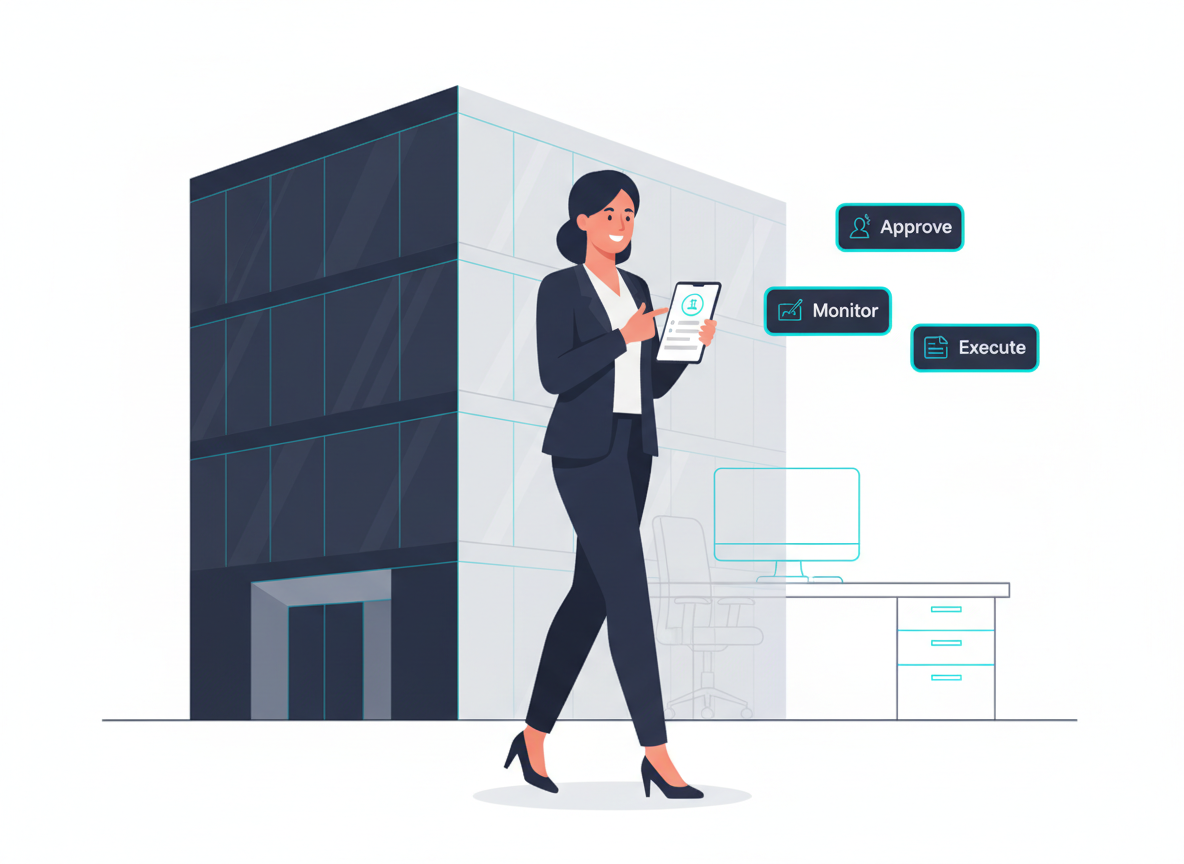
The best enterprise decisions are not made because people have more meetings.
They are made because the right people have the right information at the right moment—regardless of where they are.
This is the core promise of custom software built around enterprise mobility principles. It is not about giving everyone access to everything. Indiscriminate data access creates noise, not clarity. It is about precision—delivering exactly the information, context, and action capability that each person needs to make their specific decision, at the moment that decision needs to be made.
Custom software makes that precision possible because it is architected around the actual decision flows of the organization. It knows who needs what, when, and in what format. It surfaces approvals to approvers, alerts to responders, and insights to strategists—without requiring anyone to hunt, filter, or escalate manually.
Building the Decision-Driven Enterprise

The future of an enterprise is not shaped only by strategy. Strategy without the infrastructure to execute it at speed is aspiration, not advantage.
The decision-driven enterprise is one where leadership is not confined to a room or a role—it is distributed across every layer of execution. Where the capacity to decide is not a privilege of seniority but a function of relevance. Where the gap between knowing and acting is measured in seconds, not days.
Custom software is the foundation of that enterprise.
It transforms decision-making from a hierarchical bottleneck into a distributed intelligence system. It makes leadership ambient—present at the point of execution, not just at the point of strategy. And it ensures that when the moment demands a decision, the enterprise is always ready to make one.
Because in modern business, the enterprises that win are not always the ones with the best strategy.
They are the ones that can decide—and move—faster than everyone else.
Deventure.co builds custom software products that give enterprises the architectural advantage to compete at speed. From thick client platforms to mobile-first thin client interfaces, we design systems that put decision-making where it belongs—at every layer of your business, at every moment that matters.