

The Software‑Defined Farm: Where Telemetry Meets Intelligent Agriculture
The conversation around modern agriculture often starts with hardware: new machinery, smarter sensors, better drones, higher-resolution satellite imagery. And yes—rare earths and other critical materials are a reminder that physical components matter.
But the next leap in agricultural competitiveness won’t come from owning “more devices.” It will come from the software intelligence wrapped around those devices—software that turns scattered signals into coordinated decisions.
The future farm won’t simply be mechanised. It will be instrumented, connected, measurable—and software-defined.
From smart tools to an operational intelligence layer
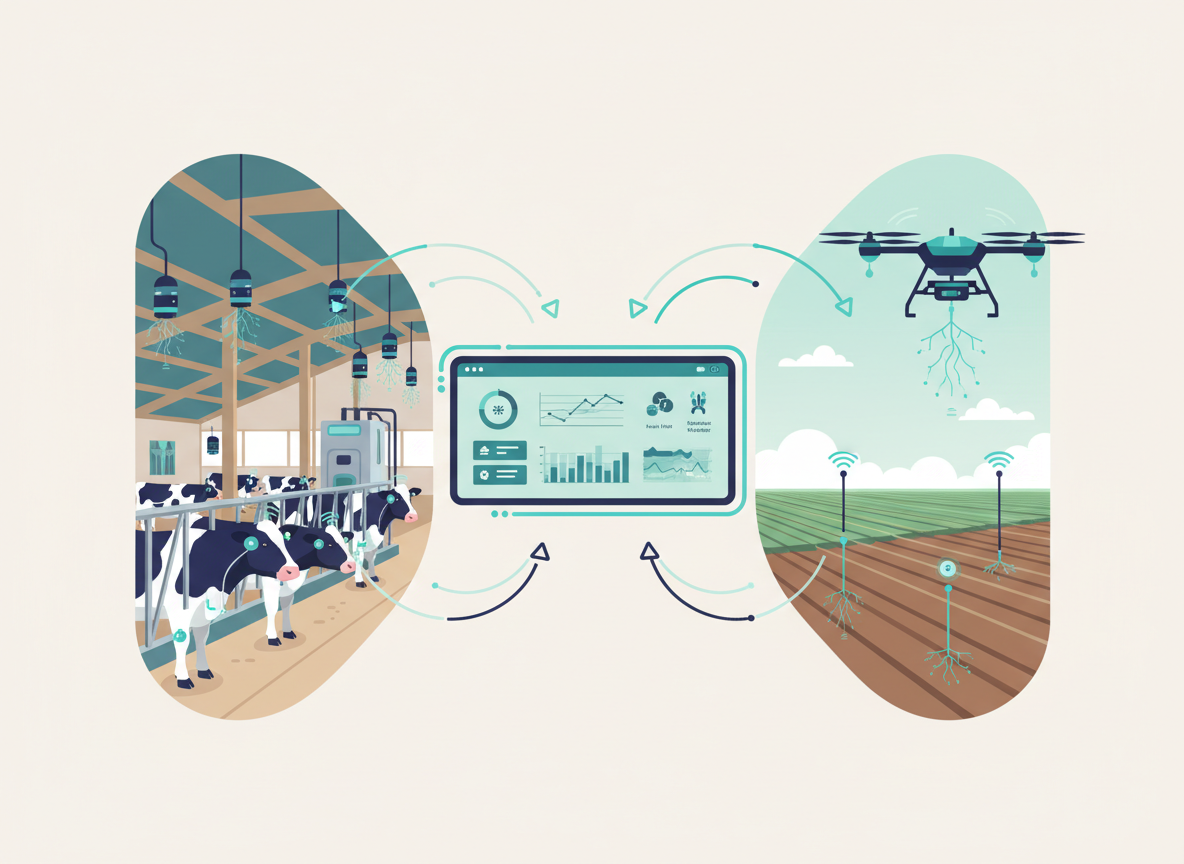
Most farms already generate data. Tractors log utilisation. Weather stations stream forecasts. Irrigation systems record flow. Soil sensors capture moisture, pH, and nutrient signals. Drones and satellites provide imagery. Livestock wearables can track movement, rumination, temperature, and location.
The problem is not data scarcity. The problem is fragmentation.
A software-defined farm brings these sources into a single operational intelligence layer—an environment where telemetry from tractors and heavy equipment, drone-based surveillance, satellite imagery, soil-quality sensors, weather stations, irrigation systems, and field-level IoT becomes one coherent system.
Instead of “yet another dashboard,” this layer behaves like a digital nervous system:
- It collects signals continuously.
- It normalizes them into usable, comparable formats.
- It detects anomalies and patterns.
- It recommends actions.
- It coordinates execution across people, machines, and partners.
In other words: it doesn’t just show what’s happening—it helps decide what to do next.
What telemetry makes possible (when software is designed for decisions)
Telemetry is often treated as monitoring. In a software-defined farm, telemetry becomes the foundation for automation and orchestration.
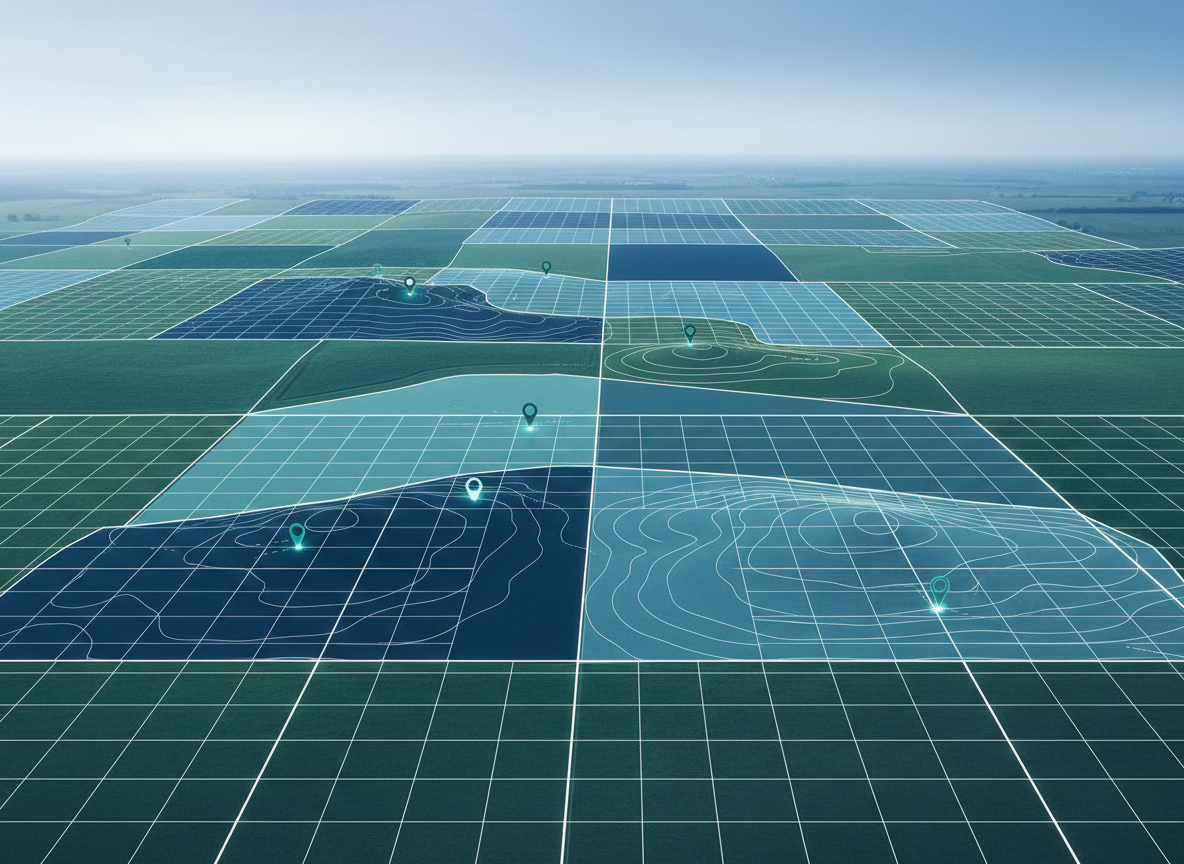
1) Digitally demarcate land and operational zones
A modern platform can digitally map fields and boundaries, then layer in soil composition, historical yields, slope, drainage, and microclimate variation. This turns “the farm” into a set of measurable zones—each with its own needs and constraints.
That matters because precision agriculture isn’t about being precise everywhere. It’s about being precise where it pays.
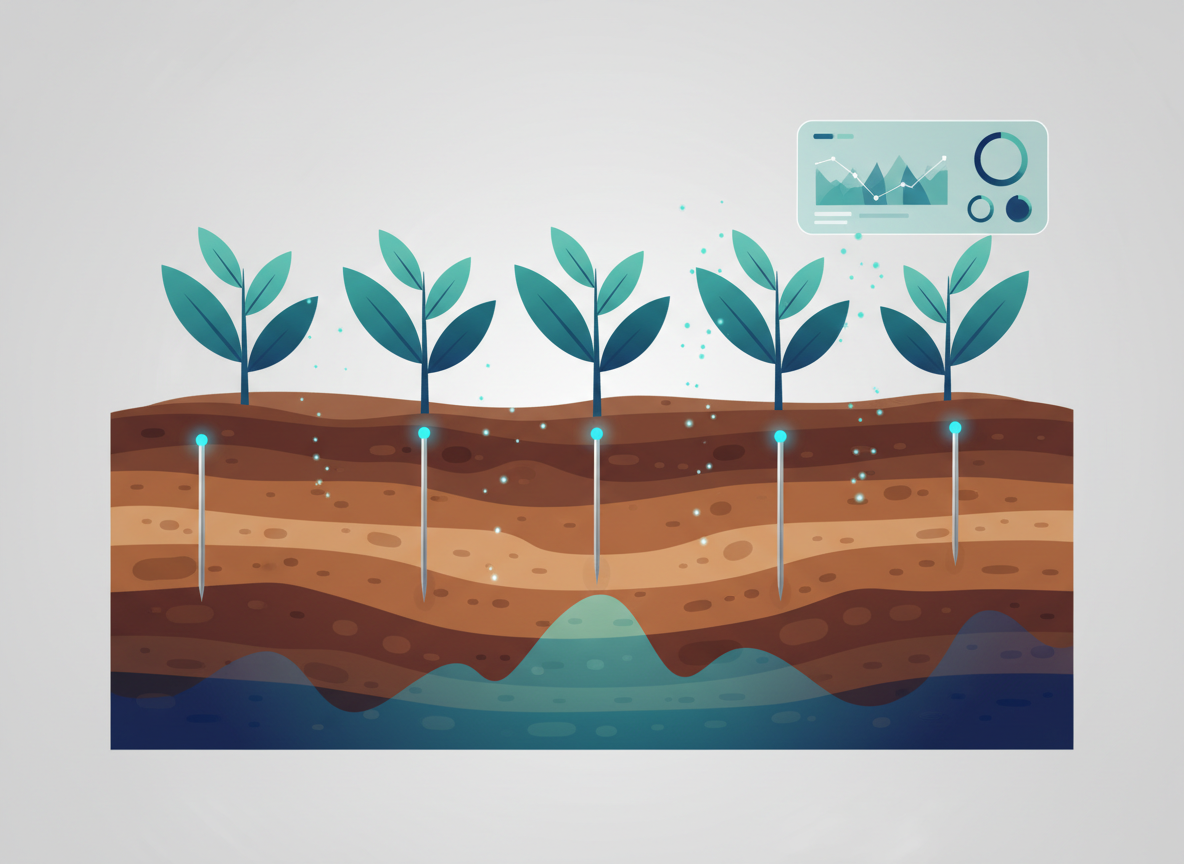
2) Map soil composition and moisture variability
Soil sensors and sampling data become far more valuable when software can interpolate, visualize, and track changes over time. Instead of a static report, you get a living map that supports decisions like:
- Where to adjust irrigation schedules
- Which zones need targeted fertilization
- When compaction or salinity trends are emerging
3) Identify crop stress early with imagery
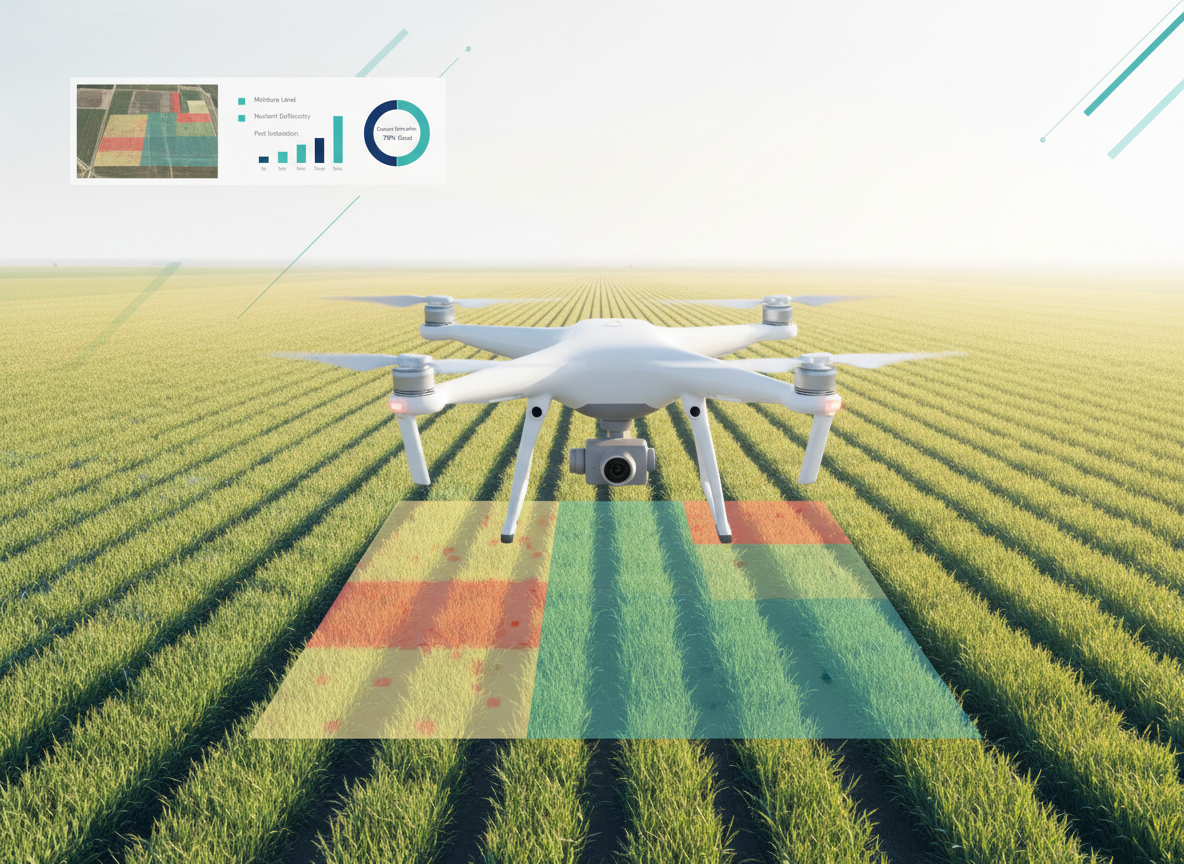
Drone and satellite imagery can surface crop stress patterns before they’re visible from the ground. The key is not the image itself—it’s the workflow that follows:
- Detect abnormal NDVI or canopy patterns
- Correlate with irrigation flow, rainfall, and soil moisture
- Generate a prioritized scouting list
- Track resolution and outcomes
This is where software turns “insight” into operational follow-through.
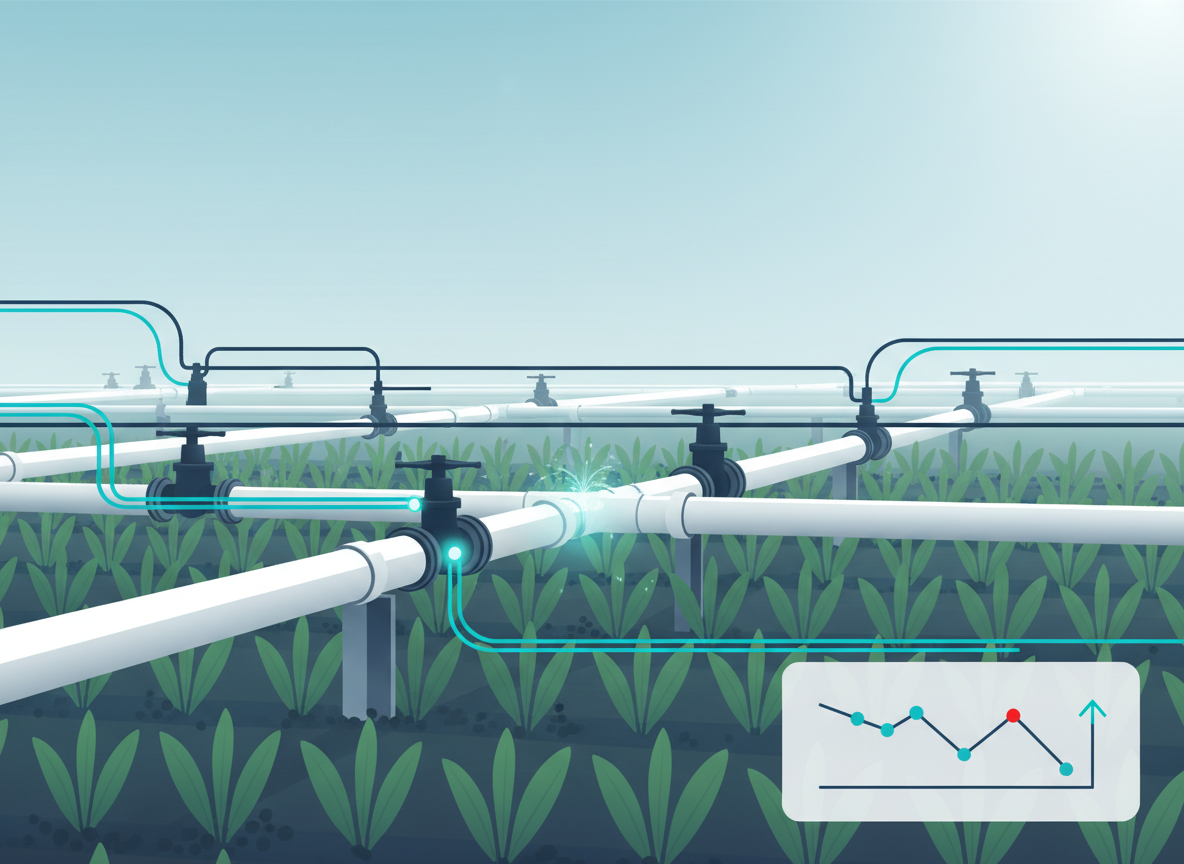
4) Detect irrigation anomalies and resource waste
Irrigation is one of the clearest places where telemetry becomes money. When flow rates, pressure, pump performance, and soil moisture are connected, software can flag:
- Leaks and line breaks
- Under-watering or over-watering zones
- Pump inefficiencies
- Schedule mismatches with weather forecasts
The result is not just better yields—it’s better resource efficiency.
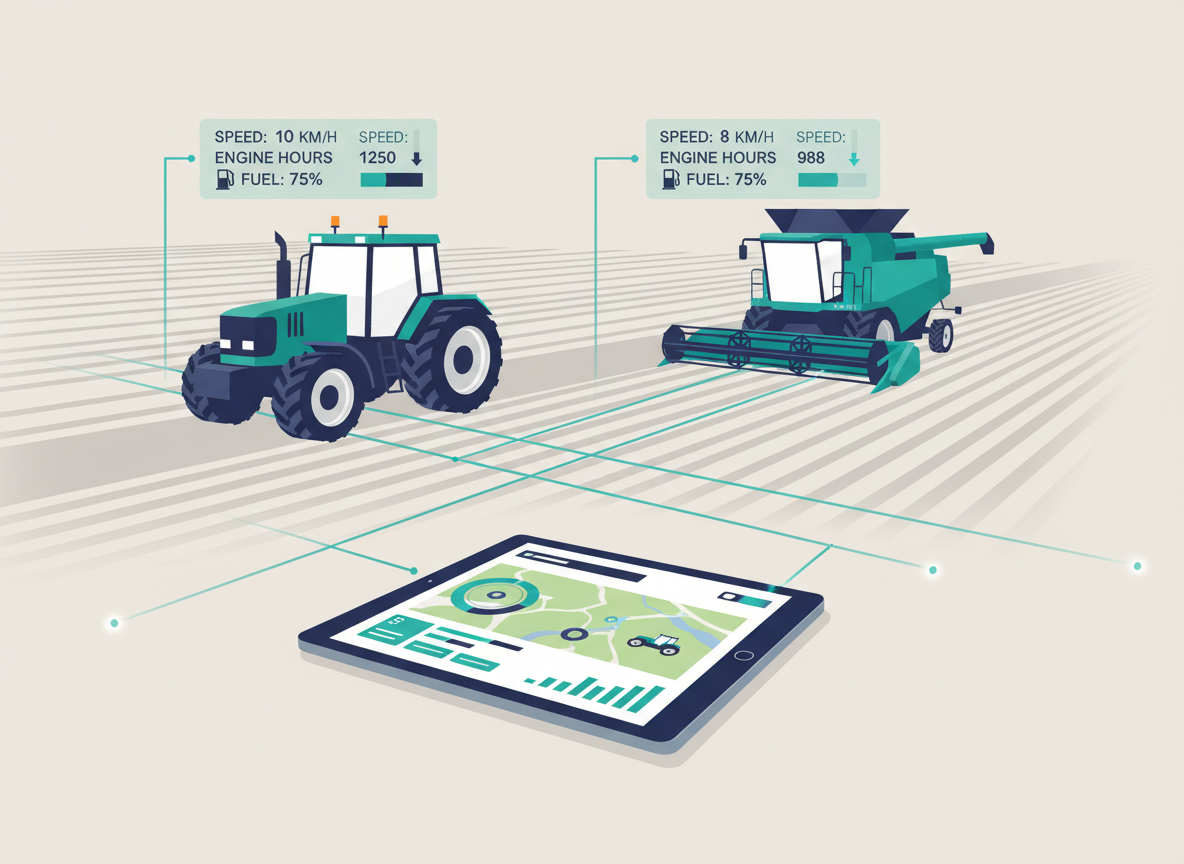
5) Track equipment utilisation in real time
Equipment is expensive, and downtime is brutal. A unified platform can track utilisation, location, fuel burn, and performance across tractors and heavy machinery—then translate that into decisions:
- Which machine is best suited for a specific job
- When maintenance should be scheduled
- How to reduce idle time and unnecessary travel
This is where the farm starts to look like a high-performing logistics operation.
Predictive maintenance: the hidden ROI engine
One of the most practical outcomes of a software-defined farm is predictive maintenance.
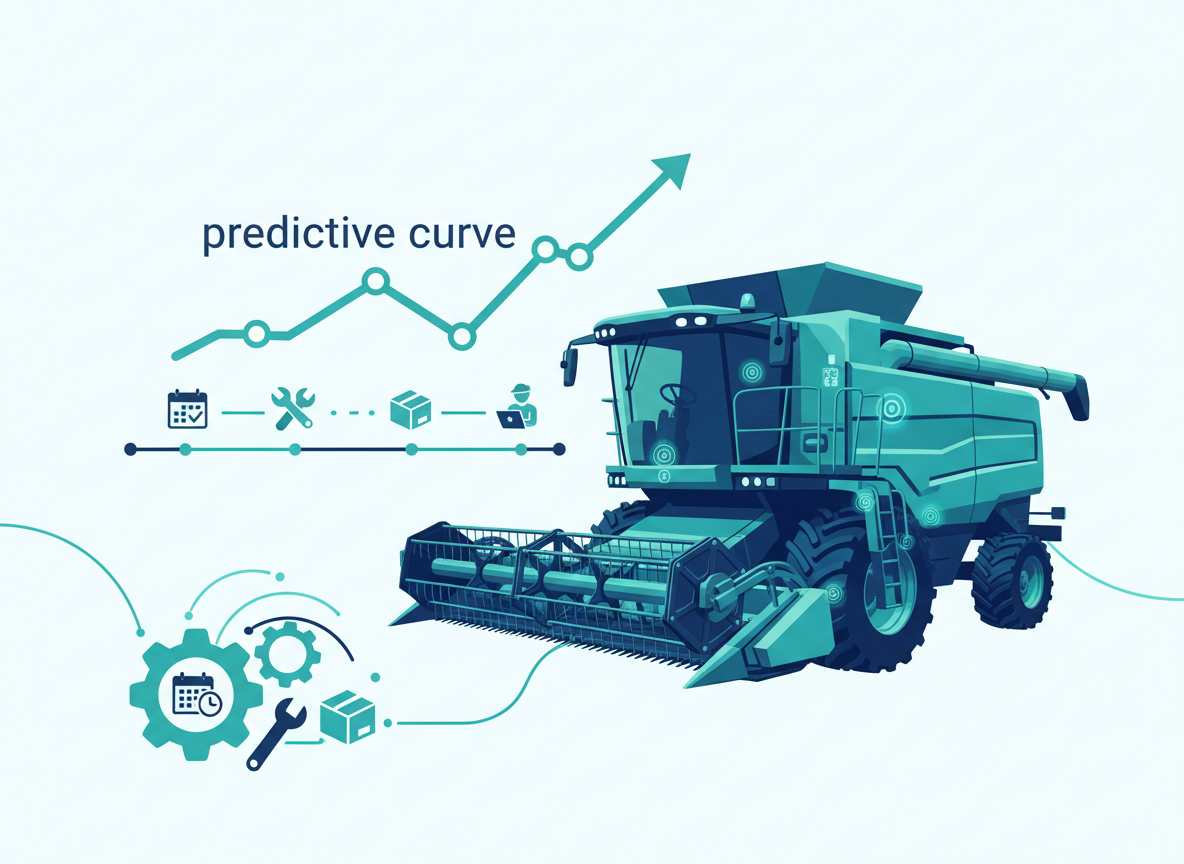
Instead of waiting for breakdowns, the platform can learn patterns from vibration, temperature, operating hours, and error codes—then predict maintenance requirements and trigger action.
The deeper opportunity is orchestration:
- The system identifies a likely failure window.
- It checks parts availability.
- It triggers parts sourcing before a breakdown occurs.
- It schedules service during low-impact hours.
- It routes the right technician with the right inventory.
This is not “smart farming” as a feature. It’s operational resilience as a system.
The connected B2B ecosystem: from farm to supply chain
When the farm becomes a telemetry-driven operation, it naturally connects to a broader B2B ecosystem:
Farmer → dealer → equipment manufacturer → parts supplier
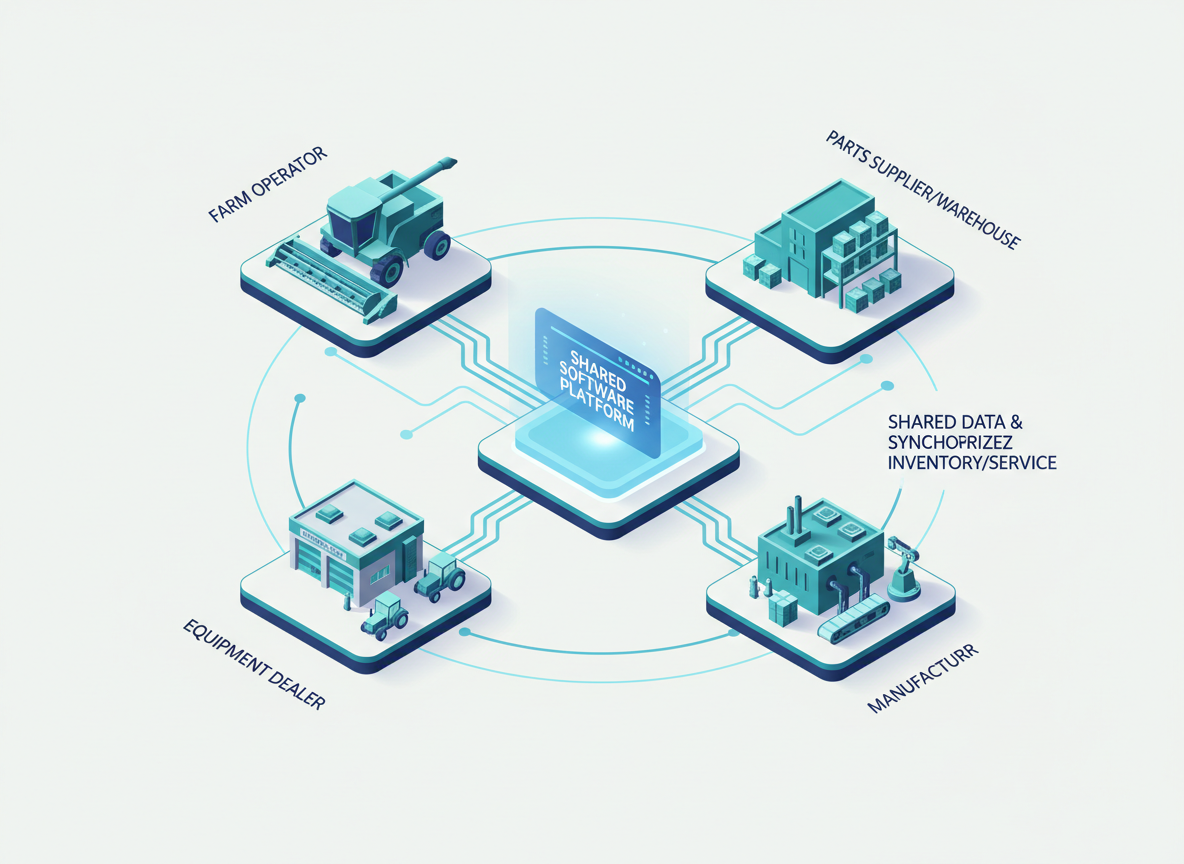
Software becomes the coordination layer that aligns demand, inventory, servicing, and deployment.
This is a major shift. Historically, each participant operated with partial information:
- Farmers knew their pain after it happened.
- Dealers reacted when the call came in.
- Manufacturers saw aggregated trends, not real-time field conditions.
- Parts suppliers stocked based on forecasts, not live demand signals.
A software-defined platform changes the timing and accuracy of decisions. Everyone can act on the same intelligence—reducing delays, minimizing downtime, and improving planning.
Livestock and crop operations converge under one platform
The same principles apply to livestock systems, where monitoring can extend beyond basic tracking into real operational outcomes:
- Animal health monitoring (vitals, rumination, activity)
- Smart shelter environment management
- Milk production tracking and analytics
- Real-time location and behavior/heat detection
- Vaccination and treatment logs for compliance
When these are unified, the farm gains a single view of performance: not just what’s happening in the field, but what’s happening in the herd—and how both affect profitability.
The real transformation: agriculture as a digital operating system
Deventure.co's' view is that the opportunity is bigger than “smart farming.”
- Physical assets continuously generate data
- Software converts that data into decisions
- Every participant in the ecosystem acts on the same intelligence
This is what “software-defined” truly means: the farm’s capabilities become upgradeable. You don’t need to replace everything to improve everything. You improve the decision layer—and the entire system gets smarter.
What makes this hard (and why custom software matters)
Off-the-shelf tools can solve slices of the problem. But a software-defined farm is an integrated system, and integration is where most initiatives fail.
A real platform must handle:
- Multiple device vendors and data formats
- Intermittent connectivity and edge processing
- Data quality, calibration, and sensor drift
- Security, permissions, and auditability
- Workflows that match real farm operations
- Reporting that supports compliance and traceability
This is why custom software development is often the difference between “a pilot that looks good” and “a platform that runs the operation.”
The farm that wins will be the farm that learns fastest
In the coming years, the competitive edge won’t belong to the farm with the most hardware.
It will belong to the farm with the best learning loop:
- Instrument operations
- Measure outcomes
- Convert signals into decisions
- Execute consistently
- Improve continuously
That is the software-defined farm.
And it’s not a distant vision. It’s a practical blueprint—built by connecting telemetry to intelligent workflows, and by treating software not as an add-on, but as the operating system of modern agriculture.