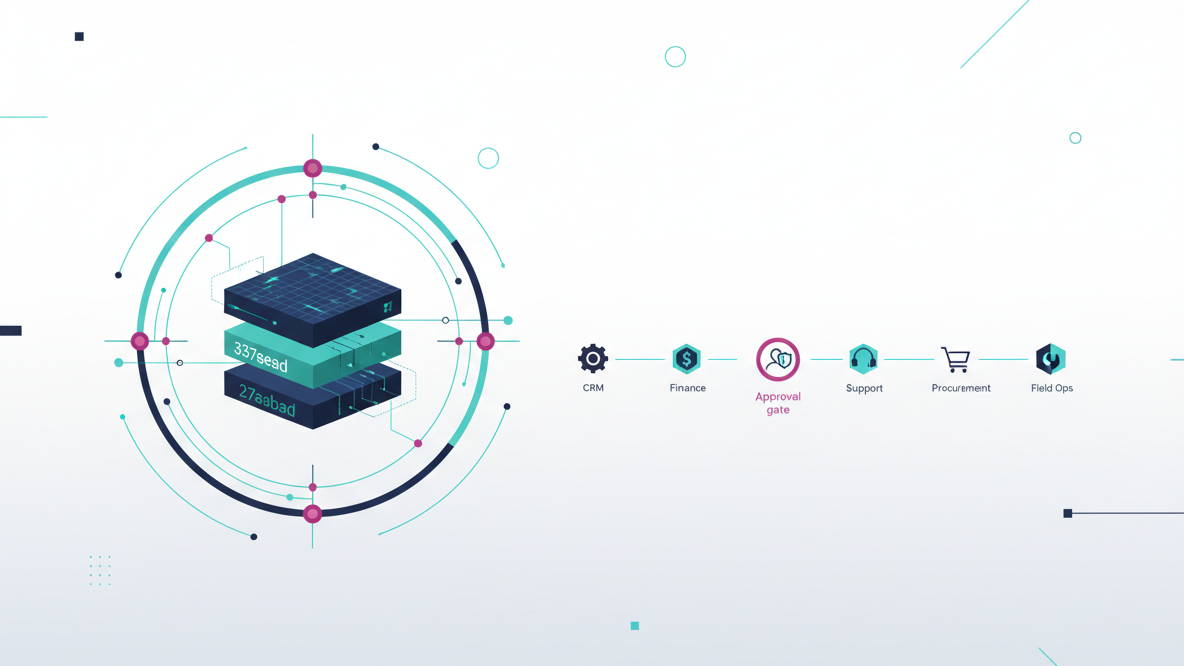


Money laundering rarely begins with dramatic fraud. More often, it starts quietly—inside everyday operations—where approvals are informal, documentation is inconsistent, and systems don’t agree on what happened. In that environment, duplicate invoices slip through, shadow vendors get onboarded, procurement cycles are manipulated, and payments are released without sufficient proof.
The uncomfortable truth is this: many enterprises don’t have a “money laundering problem” as much as they have an auditability problem.
The real risk: ambiguity in operations
When a business runs on fragmented tooling—spreadsheets, email threads, shared drives, manual sign-offs, and disconnected finance/procurement workflows—critical decisions happen outside the system of record. That creates three compounding issues:
- No single source of truth: Different teams hold different versions of the same transaction.
- Weak evidence chains: Approvals exist as messages, not enforceable workflow steps.
- Low accountability: It’s hard to prove who did what, when, and based on which information.
Malicious intent thrives in ambiguity. It doesn’t need to “hack” the business; it simply exploits the gaps.
The non-negotiable requirement: a digital footprint that can’t be erased
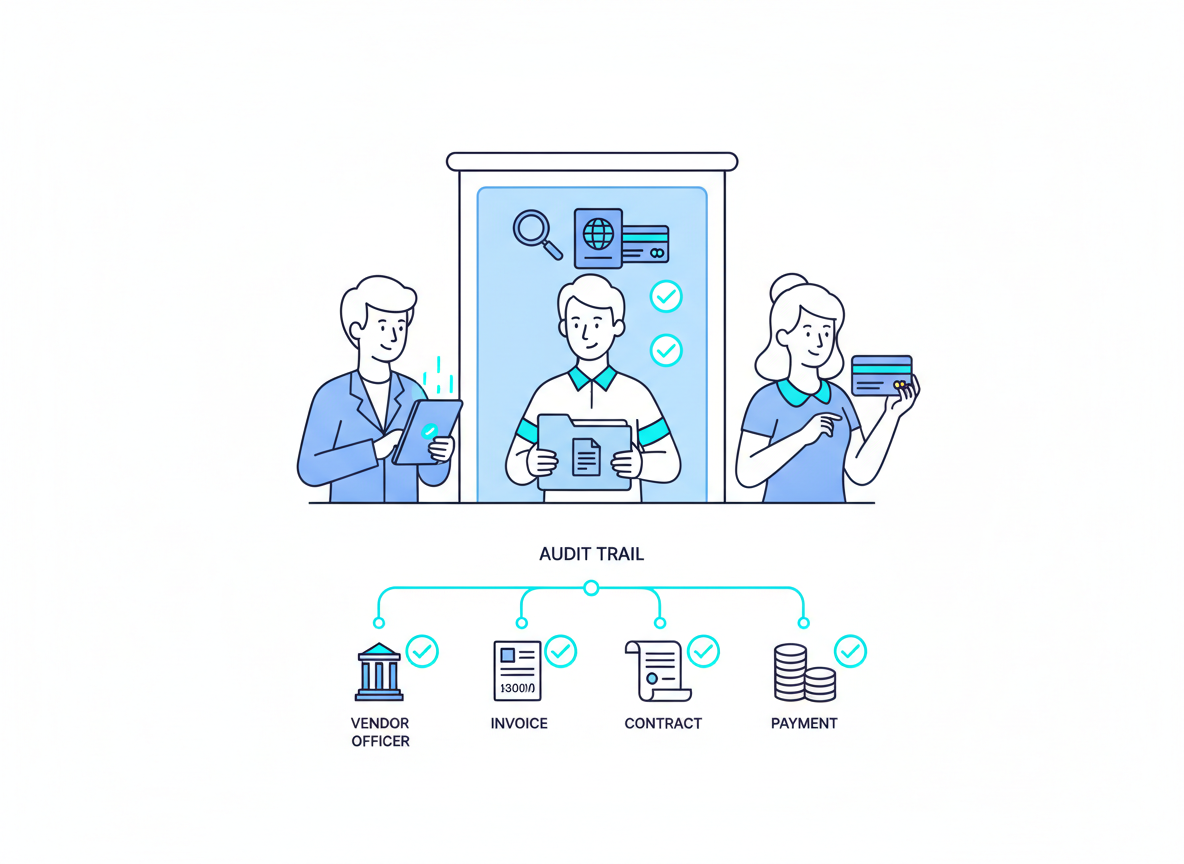
If you want to reduce financial crime risk, you need an enterprise operating model where actions are traceable by default. That means every meaningful operational event leaves a durable record—one that is difficult to bypass and easy to audit.
This is where clear audit trails created by custom software become non-negotiable.
An audit trail isn’t just a log file. It’s a structured, queryable history of business activity that captures:
- Who performed an action (verified identity)
- What was done (create, edit, approve, reject, release)
- When it happened (timestamps)
- Where it happened (system/module/context)
- Why it happened (reason codes, notes, policy references)
- With what evidence (documents, contracts, delivery proof, communications)
When built properly, audit trails turn operational history into a defensible narrative.
What custom software changes: from “best effort” to enforced governance
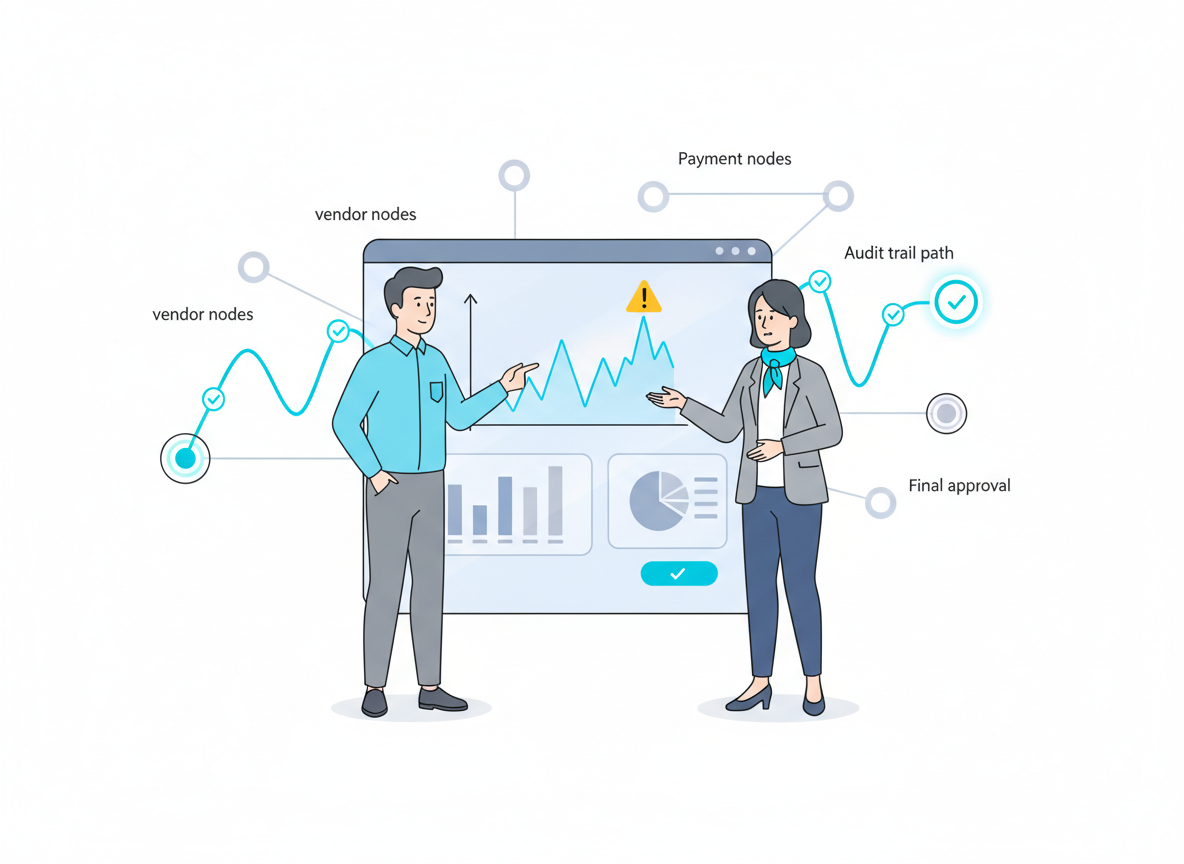
Generic tools can record activity, but they rarely enforce the governance model your organization actually needs. Custom software allows you to design workflows around your real risk points—procurement, vendor onboarding, approvals, payments, contract validation—and make the safe path the default path.
1) Total operational transparency
Custom systems map transactions and decisions to:
- User identity (SSO, MFA, device/session context)
- Approval hierarchy (who can approve what, under which conditions)
- Supporting documents (mandatory attachments and structured evidence)
- Execution history (every state change, every handoff)
This eliminates the “invisible decision-making” that often exists in email threads and hallway conversations.
Role-based access control (RBAC) and segregation of duties
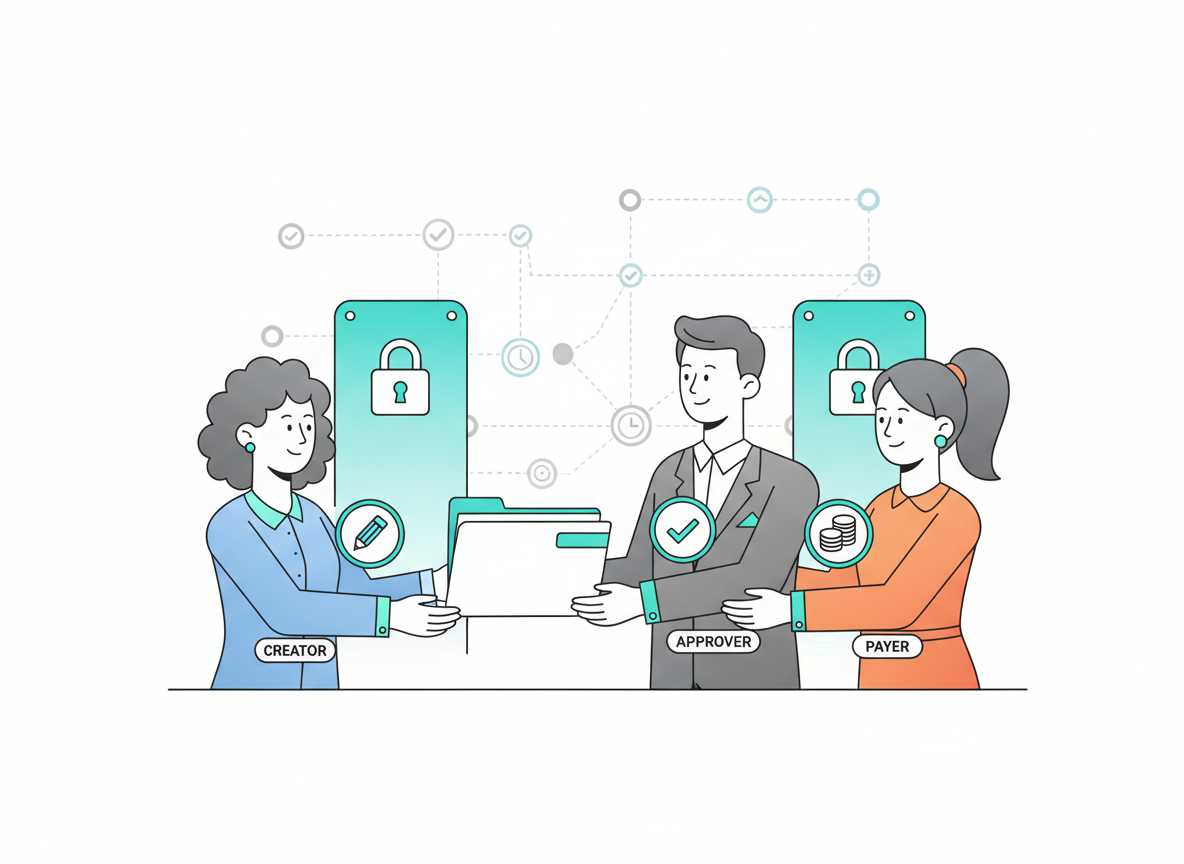
One of the most common patterns in internal fraud is the ability for a single person to:
- Create a vendor or invoice
- Approve it
- Release payment
Custom software can enforce segregation of duties through RBAC and workflow rules:
- The creator cannot be the approver
- The approver cannot be the payer
- High-risk transactions require multi-level approvals
- Exceptional approvals require documented justification
This is not about distrust—it’s about designing systems that are resilient to both mistakes and malicious intent.
3) Automated compliance checks that block risky actions
Manual compliance is inconsistent. Automation is repeatable.
Custom software can embed compliance checks directly into the workflow so that:
- Vendors cannot be onboarded without KYC verification
- Procurement cannot proceed without validation against policy thresholds
- Payments cannot be released without contract linkage and operational proof
- Payments cannot be released without contract linkage and operational proof
The key is that the system doesn’t merely “warn”—it prevents non-compliant actions unless the correct evidence and approvals exist.
4) Proactive risk detection with real-time monitoring
Traditional audits are retrospective: they tell you what went wrong after the damage is done.
Custom software enables proactive detection by surfacing anomalies as they happen:
- Unusual payment patterns (frequency, timing, amount)
- Repetitive approvals by the same individuals
- Suspicious vendor behaviour (rapid onboarding-to-payment cycles)
- Abnormal transaction values relative to historical baselines
- Policy exceptions trending upward
Dashboards and alerts shift the organisation from “investigate later” to “intervene now.”
5) Undeniable accountability
The strongest control isn’t a policy—it’s a system that makes ownership unavoidable.
When approvals, payments, and operational decisions are captured with identity, timestamps, and evidence, you get:
- Clear responsibility for each step
- Faster investigations (because the trail is complete)
- Stronger internal discipline (because actions are attributable)
- Better external defensibility (because records are consistent)
Fraud loses oxygen in structured governance.
Where money laundering hides: common operational weak points
To make this practical, here are typical areas where laundering and related financial manipulation can hide—and how custom software closes the gap:
- Vendor onboarding: Enforce KYC, beneficial ownership capture, and approval workflows.
- Invoice processing: Detect duplicates, require PO/contract linkage, enforce three-way matching.
- Procurement cycles: Track approvals, prevent threshold splitting, require justification for exceptions.
- Payment release: Require evidence, separate duties, log bank detail changes, enforce approval tiers.
- Contract validation: Ensure payments map to contractual terms and deliverables.
- Operational decisions: Record approvals for exceptions, overrides, and manual interventions.
The pattern is consistent: risk concentrates where decisions are informal and evidence is optional.
Custom software as trust architecture
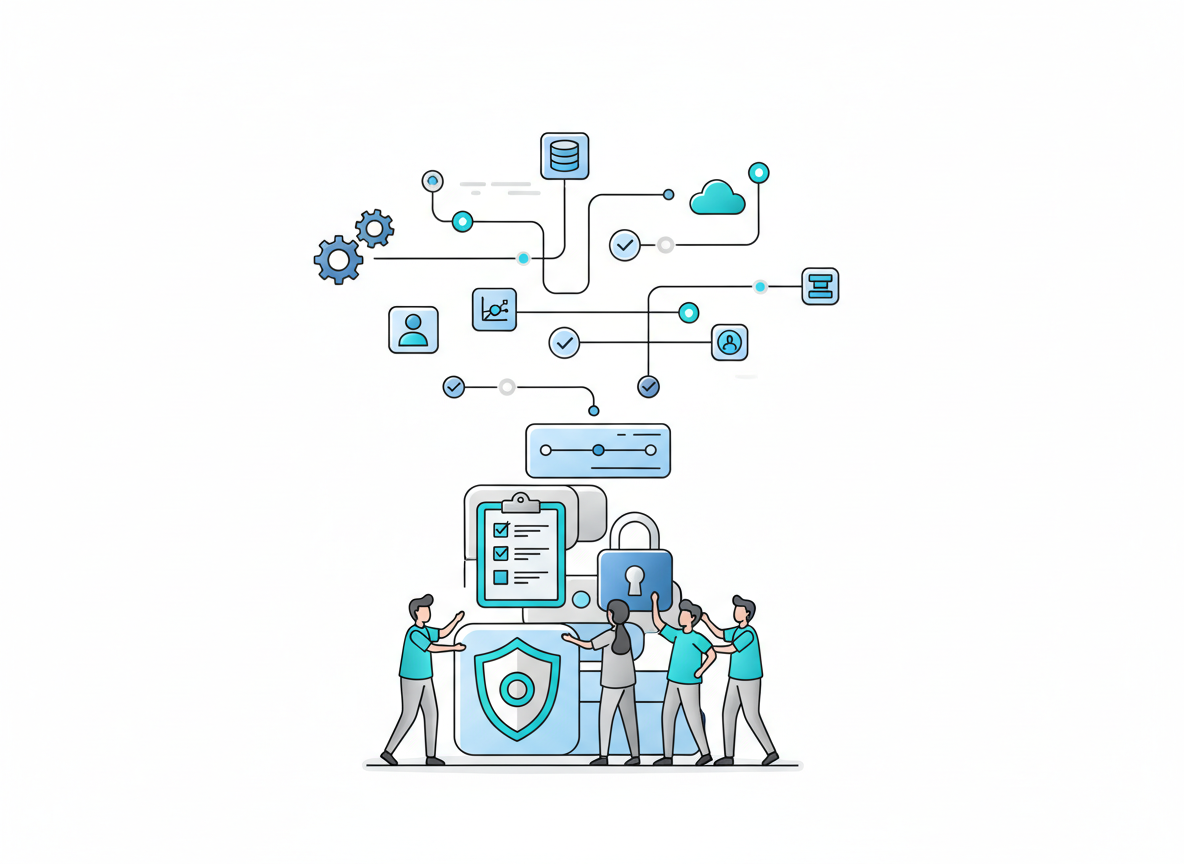
Custom software is not just a technology investment—it is trust architecture.
It protects reputation by ensuring you can explain and defend how decisions were made. It strengthens compliance by embedding controls in the workflow. It preserves financial legitimacy by preventing ambiguous, untraceable transactions. And it enables growth by making operations scalable without sacrificing governance.
A practical starting point
If you’re evaluating whether your current operating model is vulnerable, ask these questions:
- Can we prove, end-to-end, how a vendor was onboarded and why they were approved?
- Can we trace every payment to a contract, a deliverable, and a named approver?
- Can one person create and approve sensitive transactions?
- How quickly can we investigate an anomaly—minutes, days, or weeks?
- Do we prevent policy violations, or do we discover them later?
If the answers are unclear, the risk is already present.
Deventure point of view
At Deventure.co, we believe the strongest businesses are not just efficient—they are auditable, secure, and difficult to manipulate from within.
If your operations still depend on disconnected approvals and invisible decision-making, it may be time to redesign the system before risk redesigns your business.
Let’s build enterprise ecosystems where trust is not assumed—it is engineered.