

When a business commissions custom software, the conversation almost always begins with features. Timelines. Tech stacks. Deliverables. And while those conversations are necessary, they are never quite sufficient — because they describe the vehicle without acknowledging the destination.
The destination, if we are honest about it, is always human.
A CRM system is not a database. It is the way a sales team remembers that a client's daughter just started college, and uses that moment to deepen a relationship. A mobile health app is not a scheduling tool. It is the reason a patient feels seen, heard, and safe. A workforce management platform is not a shift planner. It is the instrument through which an organisation communicates — loudly and clearly — that its people's time and dignity matter.
This is the thesis we return to again and again at Deventure: custom software is never just software. It is the invisible infrastructure upon which trust networks, human relationships, and lasting partnerships are built.
What follows is an examination of that idea from every angle — through the lens of every discipline and every person involved in building, delivering, and living inside modern software systems.
The Invisible Architecture

Every piece of software that endures does so not because of its technical elegance, but because of the human behaviours it enables, protects, and sustains.
Think about the systems you use daily — the ones you would genuinely miss if they disappeared tomorrow. The common thread is not speed or design. It is trust. It is the felt sense that the system understands you, respects your time, and delivers on its promise reliably. That feeling is not accidental. It is designed, engineered, tested, and maintained by a team of human beings who cared enough to get it right.
Custom software, as distinct from off-the-shelf products, carries this responsibility even more directly. When a business chooses to build something bespoke, they are making a statement: our context is unique, our people deserve something made for them, and we are willing to invest in that specificity. That investment creates an obligation — to the end users, to the business, and to the relationships that will be mediated by the software for years to come.
The architecture of that obligation is invisible. You will not see it in a Figma file or a Git repository. You will feel it in the moment a nurse completes a patient record in three taps instead of thirty. You will see it in the retention data of a platform whose users stay not because there is no alternative, but because leaving would feel like a loss.
That is the infrastructure of human relationships. And it begins long before a single line of code is written.
Developers as Architects of Human Experience
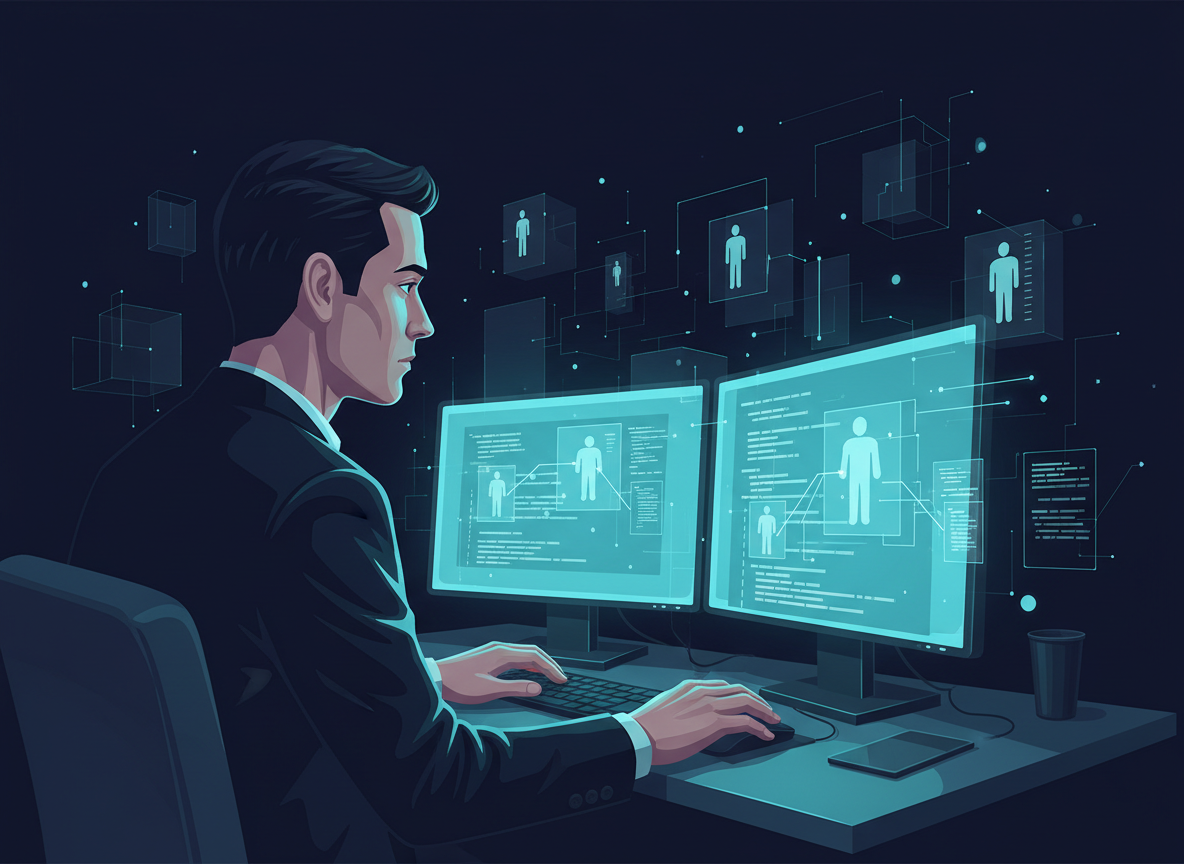
There is a persistent myth that software development is a purely technical discipline — that developers sit in isolation, translating requirements into logic, indifferent to the human outcomes their code produces.
The best developers we have ever worked with would reject that myth entirely.
When a developer makes a decision about data structure, they are making a decision about how quickly a support agent can retrieve a customer's history under pressure. When they design an API response, they are making a decision about whether a mobile app feels instantaneous or sluggish to a user who is already frustrated. When they choose how to handle an error state, they are deciding whether a user feels guided back to safety or abandoned mid-task.
Every architectural decision is a human decision in disguise.
This reframing matters because it changes the standard against which we measure good development. A feature that works is not the goal. A feature that works for the human being who needs it, in the context in which they need it, under the conditions they are actually operating in — that is the goal.
At Deventure, our development teams are trained to hold both questions simultaneously: Does this work technically? and Does this serve the person who will use it? When those two questions converge on the same answer, you get software that lasts.
The developer who understands that they are building human infrastructure — not just functional code — will make different, better decisions at every level of the stack. They will write cleaner error messages. They will think about edge cases not as annoyances but as the moments when a user most needs the system to be graceful. They will treat performance not as a metric but as a form of respect for someone's time.
When we build with that consciousness, software stops being a product and becomes a relationship.
UX Designers & the Language of Emotion
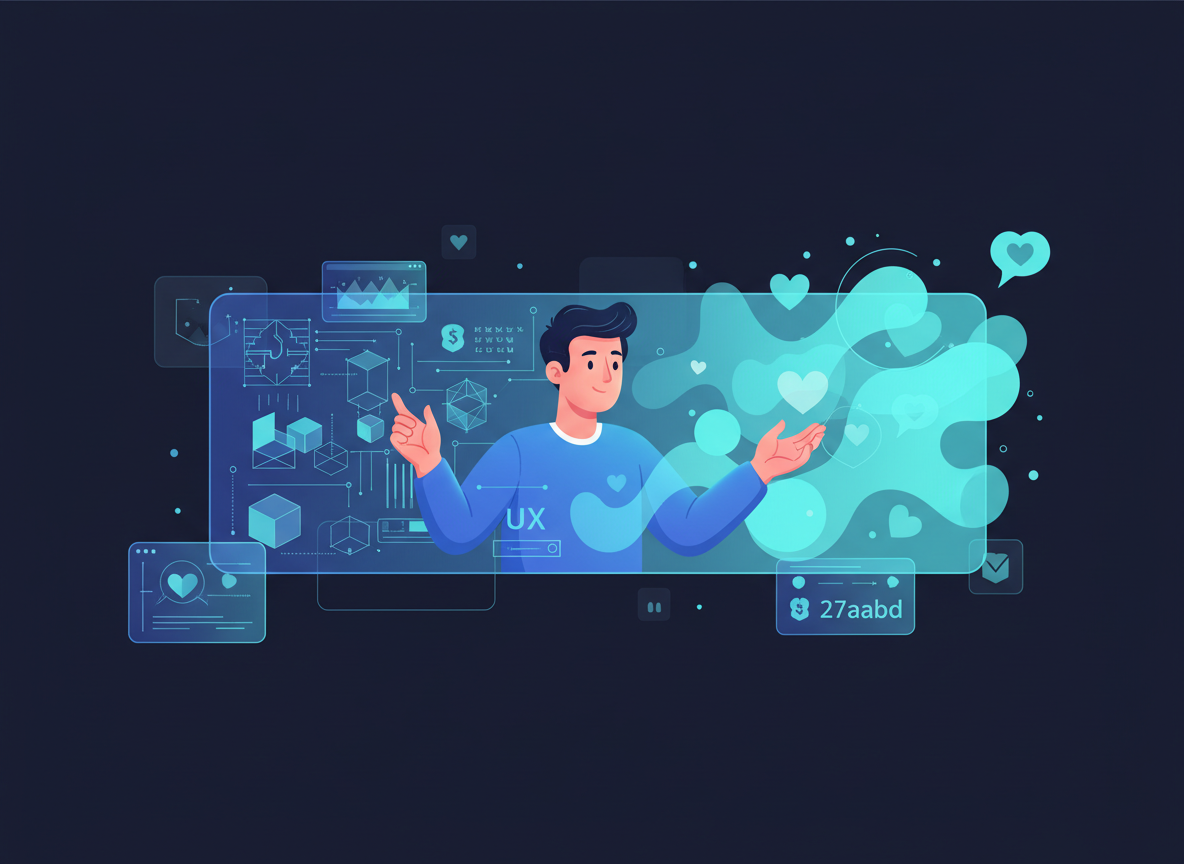
If developers are the architects of human experience, UX designers are its translators.
Design is often reduced to aesthetics — to colour palettes and typography and the satisfying click of a well-placed button. But the deeper function of design is translation: taking the complex logic of a system and rendering it into a language that a human being can understand, navigate, and trust without effort.
Every interface is a conversation. And like any conversation, it can be welcoming or alienating, clear or confusing, respectful or dismissive. The design of that conversation determines how users feel — not just about the product, but about the organisation behind it.
Consider the difference between a form that demands information in an arbitrary sequence and one that guides a user through a logical, contextually aware journey. Both collect the same data. But one communicates: we thought about you. The other communicates: we thought about us.
Emotion in UX is not decoration. It is signal. The micro-animation that confirms a successful action is not frivolous — it is the digital equivalent of a nod of acknowledgment. The empty state that greets a new user with encouragement rather than blankness is not indulgent — it is onboarding done with empathy. The error message written in plain language rather than technical code is not simplification — it is respect.
Our design team at Deventure.co operates from a simple conviction: the goal of every screen is to reduce cognitive load and increase felt confidence. When a user moves through a well-designed system, they should feel competent, oriented, and in control. That feeling is the foundation of trust. And trust, built interaction by interaction, becomes relationship.
The language of emotion in design is precise. It takes skill to learn and discipline to apply consistently across a product. But when it is done well, users do not think about the interface at all. They simply experience the outcome. And that seamlessness — that invisibility — is the highest achievement in UX.
Project Managers & the Rhythm of Human Systems
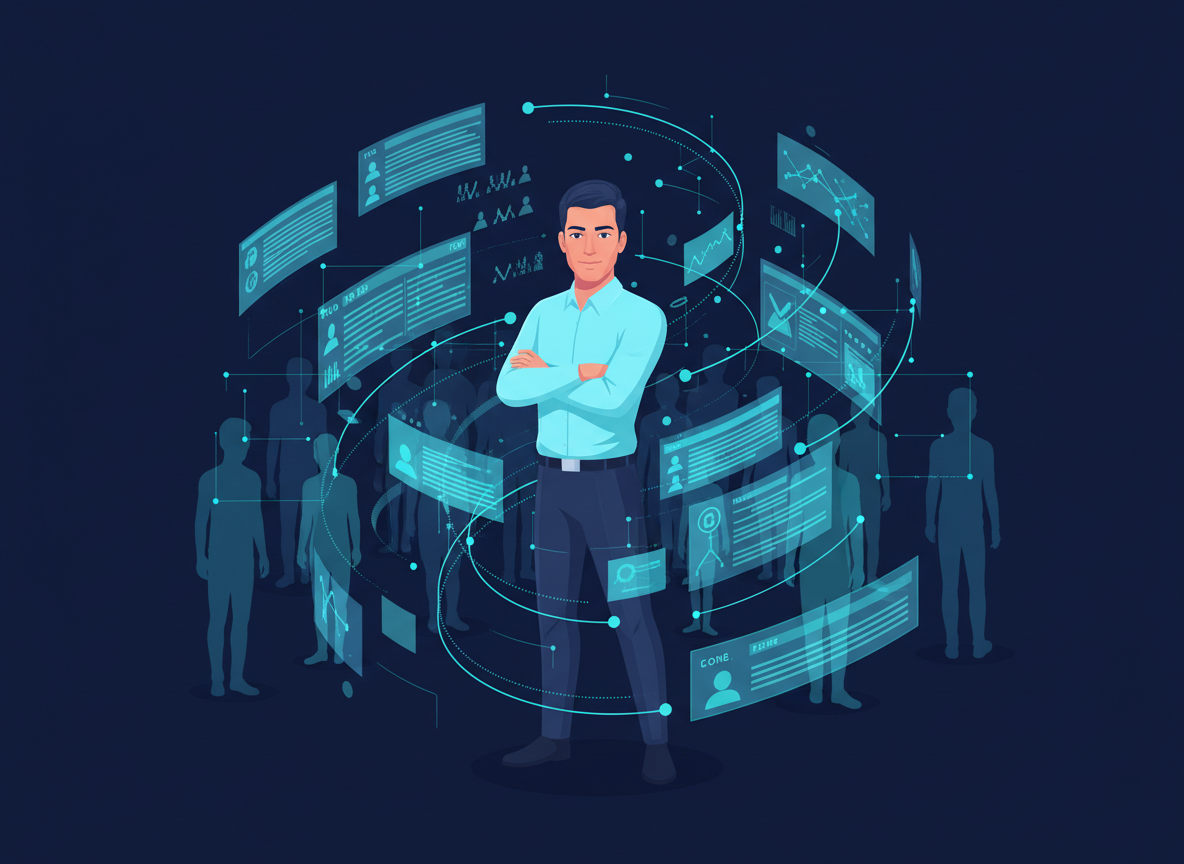
Behind every software project that ships on time, within scope, and to a satisfied client, there is a project manager who absorbed enormous complexity and made it look manageable.
Project management is often described in terms of frameworks and methodologies — Agile, Scrum, Kanban, OKRs. These are useful. But they are the notation of project management, not its substance. The substance is human. It is the ability to hold a clear vision of the destination while navigating the daily friction of competing priorities, shifting requirements, unclear communication, and the unpredictable reality of working with people.
A great project manager is, at their core, a translator of context. They translate between a client's business goals and a development team's technical realities. They translate between what was agreed in a discovery session and what is actually feasible in the current sprint. They translate urgency into priority, ambiguity into clarity, and risk into a plan.
What this means in practice is that the project manager is the human infrastructure of a project. They are the connective tissue between every discipline — design, development, QA, strategy — ensuring that each team's work is legible and usable by every other team. When that connective tissue is strong, a project moves with rhythm. When it is absent or weak, projects fragment into silos, and the human cost is borne by everyone: by developers who build the wrong thing, by designers whose work is never implemented correctly, and ultimately by users who receive a product that doesn't cohere.
At Deventure.co, our project managers are embedded partners, not administrators. They are present in client conversations not to take notes but to understand intent. They are present in sprint reviews not to track velocity but to ensure the work is still oriented toward the human outcome it was meant to achieve.
The rhythm of a human system is delicate. A great project manager protects it, even when everything else is trying to disrupt it.
QA Engineers & the Trust Infrastructure
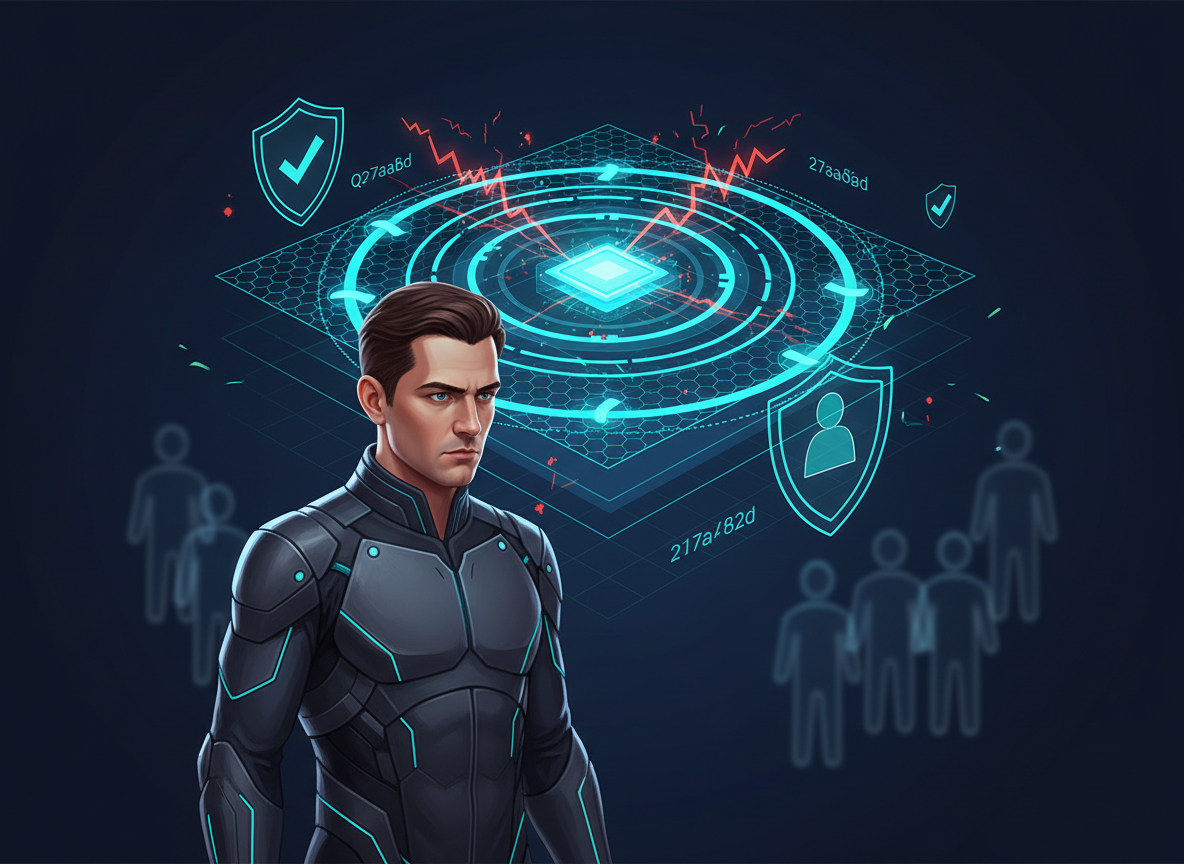
Quality assurance is the discipline most likely to be undervalued and most necessary to get right. Because QA is not about finding bugs. It is about protecting trust.
Every software product makes an implicit promise to its users: when you take action here, we will respond correctly. QA is the function that verifies, exhaustively and methodically, that the promise holds. It is the function that stands between intention and delivery, between what a feature is supposed to do and what it actually does when a real user, in a real context, with a real need, interacts with it.
The stakes of that promise vary enormously. In a consumer app, a broken promise might mean a user churns to a competitor. In a healthcare application, it might mean a clinician receives incorrect information at a critical moment. In a financial system, it might mean a transaction fails at the exact moment a business most needs it to succeed.
This is why QA engineers are, in the deepest sense, guardians of the relationship between software and its users. Their work is the last line of defence before a product reaches the people who will depend on it. And their rigour — their willingness to test edge cases, to simulate failure conditions, to ask what happens if everything goes wrong at once — is an act of care for those people.
At Deventure, QA is not a gate at the end of development. It is a discipline woven through the entire delivery process. Our QA engineers are involved from requirements gathering, because the best time to prevent a defect is before it is designed into the system. They are involved in sprint reviews, because catching a misalignment between intent and implementation early is always cheaper and more humane than catching it after release.
Trust, once broken by software, is difficult to restore. The QA engineer's job is to ensure it never breaks in the first place.
Data Scientists & the Memory of Organisations
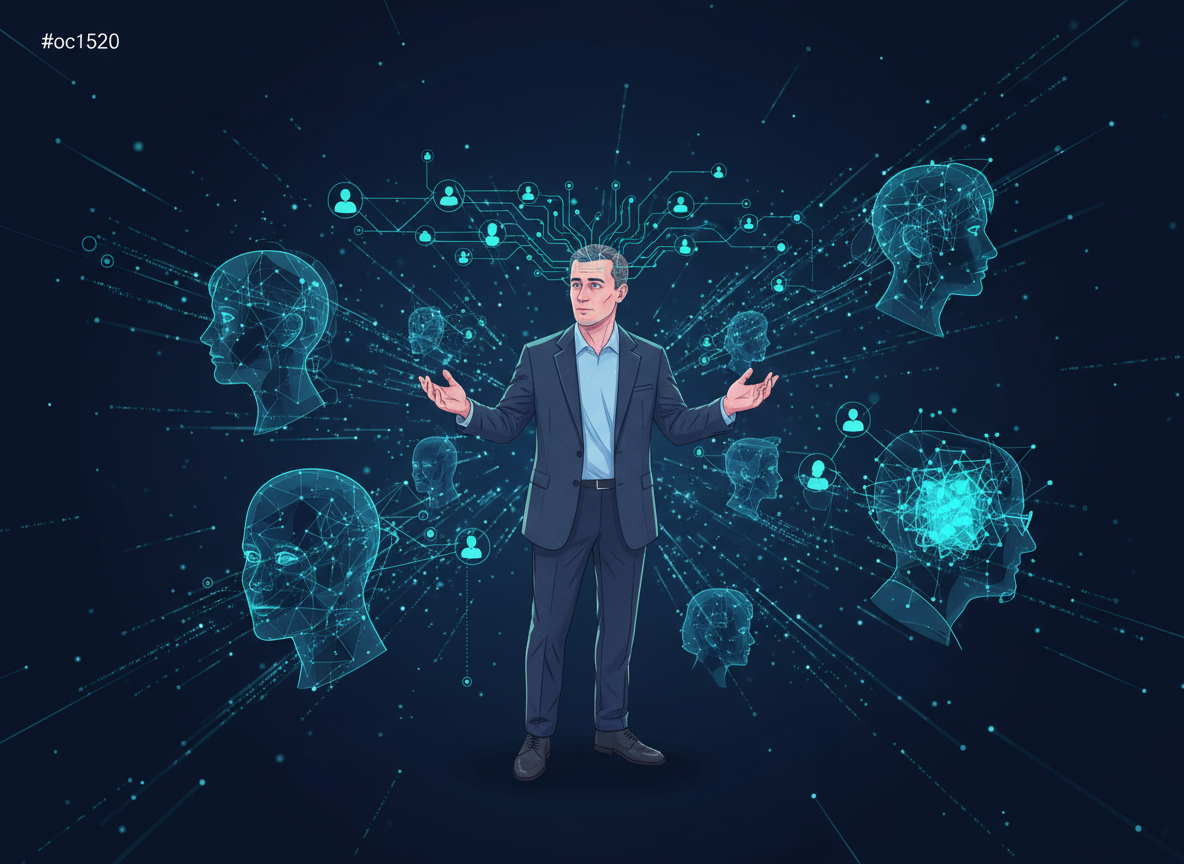
Data is often described as the new oil — a resource to be extracted, refined, and monetised. This framing is not wrong, but it is incomplete. Because data, in its most meaningful form, is not a commodity. It is memory.
It is the memory of every transaction a customer has completed. Of every support interaction that revealed a pain point. Of every product decision that produced a measurable outcome. Of every moment when user behaviour diverged from what the product team expected — which is to say, every moment when reality offered to teach us something.
The data scientist's role is to give organisations access to that memory in a form they can act on. To translate the accumulated record of human behaviour — messy, incomplete, and vast — into insight that is specific enough to be useful and honest enough to be trusted.
This is harder than it sounds. The temptation in data science, as in so many analytical disciplines, is to find the pattern that confirms what we already believe. The discipline is to follow the data to conclusions that challenge us, that reveal the gaps between our assumptions and our users' actual experience.
When done with integrity, data science is one of the most powerful acts of empathy available to a product organisation. It allows a team to understand not just what users say they want, but what their behaviour reveals they need. It allows a business to identify the moments of friction that users have stopped complaining about because they have simply given up and found a workaround. It allows leadership to make decisions grounded in the lived experience of the people they are building for.
Data science, at its best, is the mechanism by which organisations honour their users' experience — not by asking for feedback, but by listening to what the data already knows.
DevOps & the Heartbeat of Human Continuity
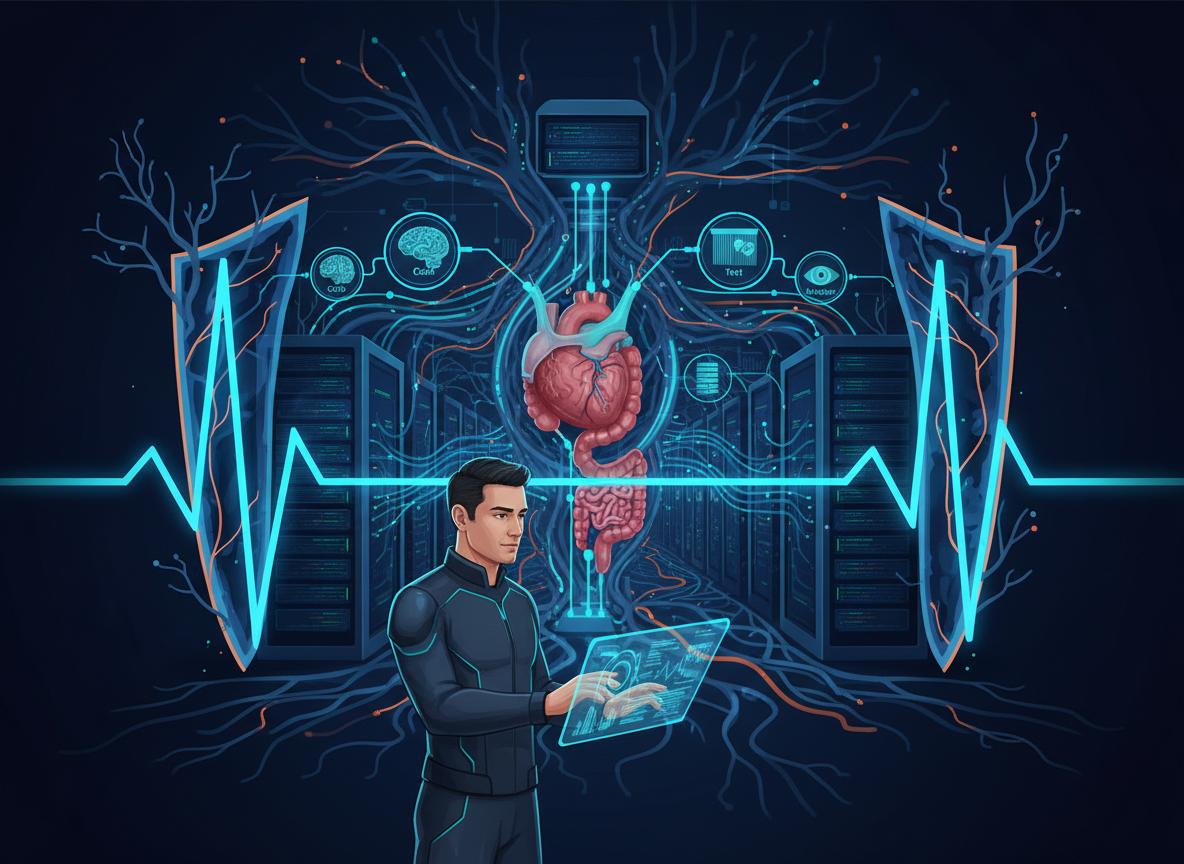
Nobody thinks about DevOps when it is working. That is, by design, the point.
DevOps is the practice of ensuring that software is available, reliable, and continuously improving without disruption to the people who depend on it. It is the infrastructure of continuity — the engineering of systems that do not fail, or that recover so gracefully from failure that the disruption is invisible.
In human terms, this is profound. Consider what it means for a hospital to have a patient management system that is available 24 hours a day, every day, without exception. Or for a logistics company to have a tracking platform that processes millions of events per hour without degrading. Or for a fintech product to complete a payment in milliseconds, at any volume, under any load. These are not technical achievements in isolation. They are acts of reliability that human beings have come to depend on — and whose absence would cause real, felt harm.
The DevOps engineer is the keeper of that reliability. They design the pipelines that move code from development to production safely and repeatably. They build the monitoring systems that detect failure before users do. They engineer the redundancy that ensures a single point of failure never becomes a system-wide crisis. They establish the deployment practices that allow a product to improve continuously without ever requiring it to go offline.
At Deventure, our DevOps practice is oriented around a single question: what does continuity mean to the human being using this system? The answer to that question — which varies significantly depending on context — determines how we architect reliability. A healthcare platform demands different guarantees than a content management system. A trading application has different latency tolerances than a social network. Understanding those differences requires not just technical expertise but genuine engagement with the human stakes of the system.
DevOps is the heartbeat of a product. When it is healthy, nobody notices. When it fails, everyone feels it. That asymmetry is why it deserves to be taken as seriously as any other discipline in the software lifecycle.
Product Owners & Customers: Emotional Equity
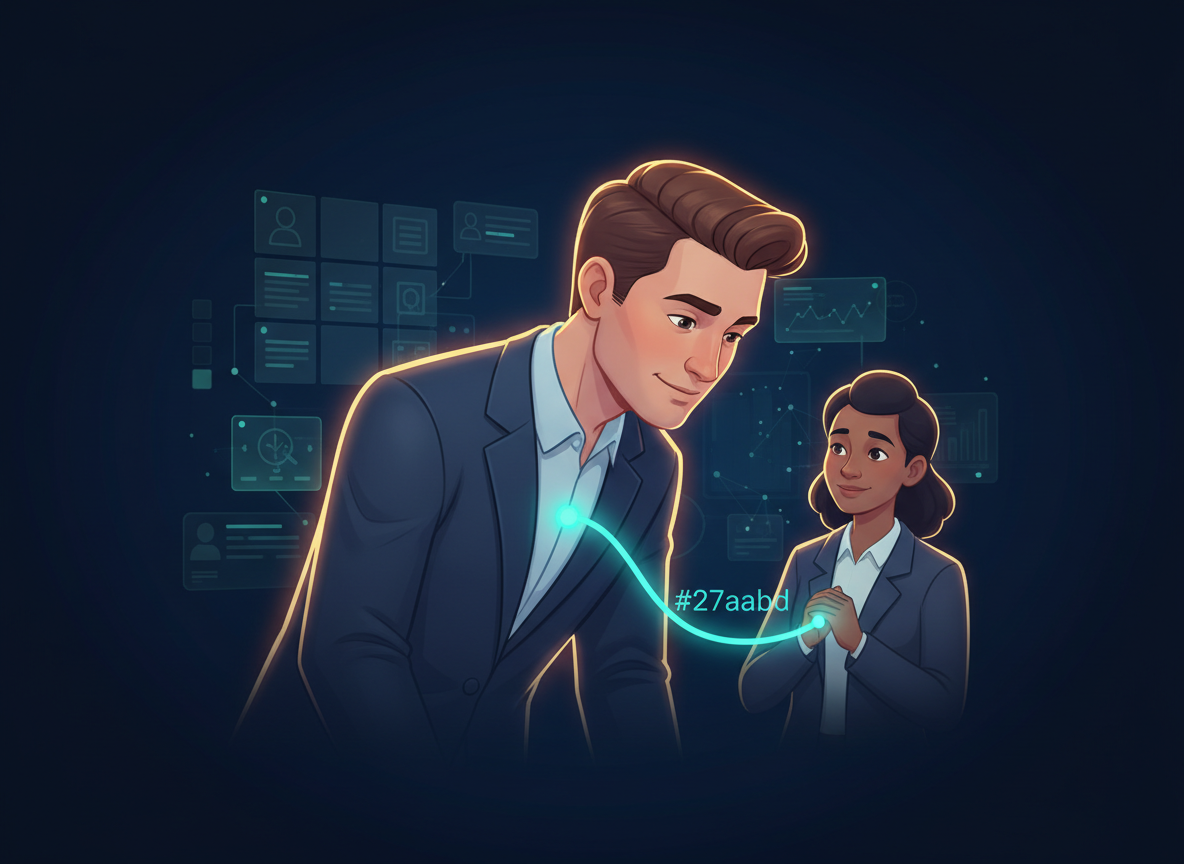
There is a concept in brand theory called emotional equity — the accumulated reservoir of positive feeling that a customer holds toward a brand, built through repeated positive experiences over time. It is distinct from rational preference. It is the reason a customer will pay a premium for a product they trust, recommend it without being asked, and forgive an occasional failure without immediately abandoning the relationship.
Emotional equity is built slowly and lost quickly. And in the modern digital environment, it is built — or destroyed — primarily through software interactions.
Every time a customer interacts with a product and it works as expected, a small deposit is made into the emotional equity account. Every time it fails, a withdrawal is taken. The mathematics of this are not symmetric: withdrawals are significantly larger than deposits. Which is why consistency — the unglamorous, day-after-day reliability of a product that just works — is one of the most powerful brand-building activities available to a modern business.
The product owner sits at the intersection of this dynamic. They are the person responsible for the vision of a product — for understanding what it needs to do, for whom, and why — and for translating that vision into a roadmap that a team can execute. They are, in effect, the custodian of the relationship between the organisation and its users, expressed through software.
This makes the product owner's role one of the most consequential in any digital business. Their decisions about prioritisation, scope, and quality standards ripple outward through every sprint and into every user interaction. A product owner who understands the emotional stakes of their product — who treats each feature decision as a relationship decision — will produce fundamentally different outcomes than one who treats the backlog as a list of technical tasks.
At the customer level, the relationship with software is experienced not as a series of features but as a continuous narrative. Does this product understand me? Does it improve over time in ways that reflect my feedback? Does it treat my data with care? Does it get better at helping me as it learns more about how I work?
When the answer to those questions is consistently yes, the software has become more than a tool. It has become a trusted presence in the customer's working life — a relationship rather than a transaction.
Custom software becomes the daily proof of that promise. That is where brand becomes relationship.
The Full Team: Infrastructure of Human Relationships

What emerges from this examination is a picture that is more complex — and more beautiful — than the conventional narrative of software development.
Software is not built by machines. It is built by people, for people, to mediate the relationships between people and organisations, between colleagues, between businesses and their customers, between processes and the human beings who must live and work inside them.
Every role in the software lifecycle — from the developer who writes the first line of code to the support agent who fields the call when something goes wrong — is a node in the infrastructure of human relationships. Each one carries responsibility. Each one has the capacity to make the relationship stronger or weaker, more trusted or less, more human or less.
At Deventure, this is not philosophy. It is practice.
It is why we deliver design, development, and QA under one roof — not for operational convenience, but because the quality of a human relationship is determined by the coherence of the experience it creates. Fragmented delivery creates fragmented experiences. Integrated delivery creates the kind of coherent, consistent, human-centred products that users trust and organisations can build upon.
It is why we work as partners, not vendors. Because the software we build will outlast any single project engagement. It will be used by people we will never meet, in moments we cannot anticipate, under conditions that will evolve in ways neither we nor our clients can fully predict. Knowing that, we build with care.
It is why we are available around the clock, willing to go further than the brief requires, and committed to taking ownership of our clients' success as if it were our own. Because we understand that what we are building is not software. It is the infrastructure upon which the relationships of a business — with its customers, its people, and its future — will be built and sustained.
Conclusion: The Measure of Software Is Humans

The next time you evaluate a software investment — whether as a buyer, a builder, or a leader — we invite you to shift the frame slightly.
Do not ask only: what does this software do?
Ask: who does this software serve? Ask: what relationships does it enable? Ask: what does it communicate about how this organisation values the people inside and around it? Ask: when it is gone, what will be missed?
The answers to those questions are the true measure of a software product. Not its feature count. Not its performance benchmarks. Not its code coverage or its uptime SLA, though those things matter enormously in service of the answers.
The measure of software is human. It always has been.
Custom software is never just software. It is the infrastructure of human relationships. Build it like it matters — because to the people who use it, it does.
Deventure is a full-stack custom software development company building bespoke web and mobile applications with a dual focus on quality and speed to market. Our multi-disciplined team delivers UI/UX design, custom software development, and quality assurance testing all in-house — creating efficient, cost-effective solutions for businesses across recruitment, healthcare, fintech, education, travel, and workforce management.
When you partner with Deventure, you are not just hiring a software development company. You are making an investment in a relationship that delivers a return on your digital investment and frees you up to focus on what you do best.